
How to Create Monochromatic Suit Looks
Monochrome suiting is one of the most reliable ways to look sharp, modern, and intentional in a professional setting, especially in offices where standing out without “standing out” matters. When you understand how to work with a single color family instead of just “all black everything,” you can build outfits that feel powerful, cohesive, and easy to repeat on busy days.
What Monochrome Dressing Really Is
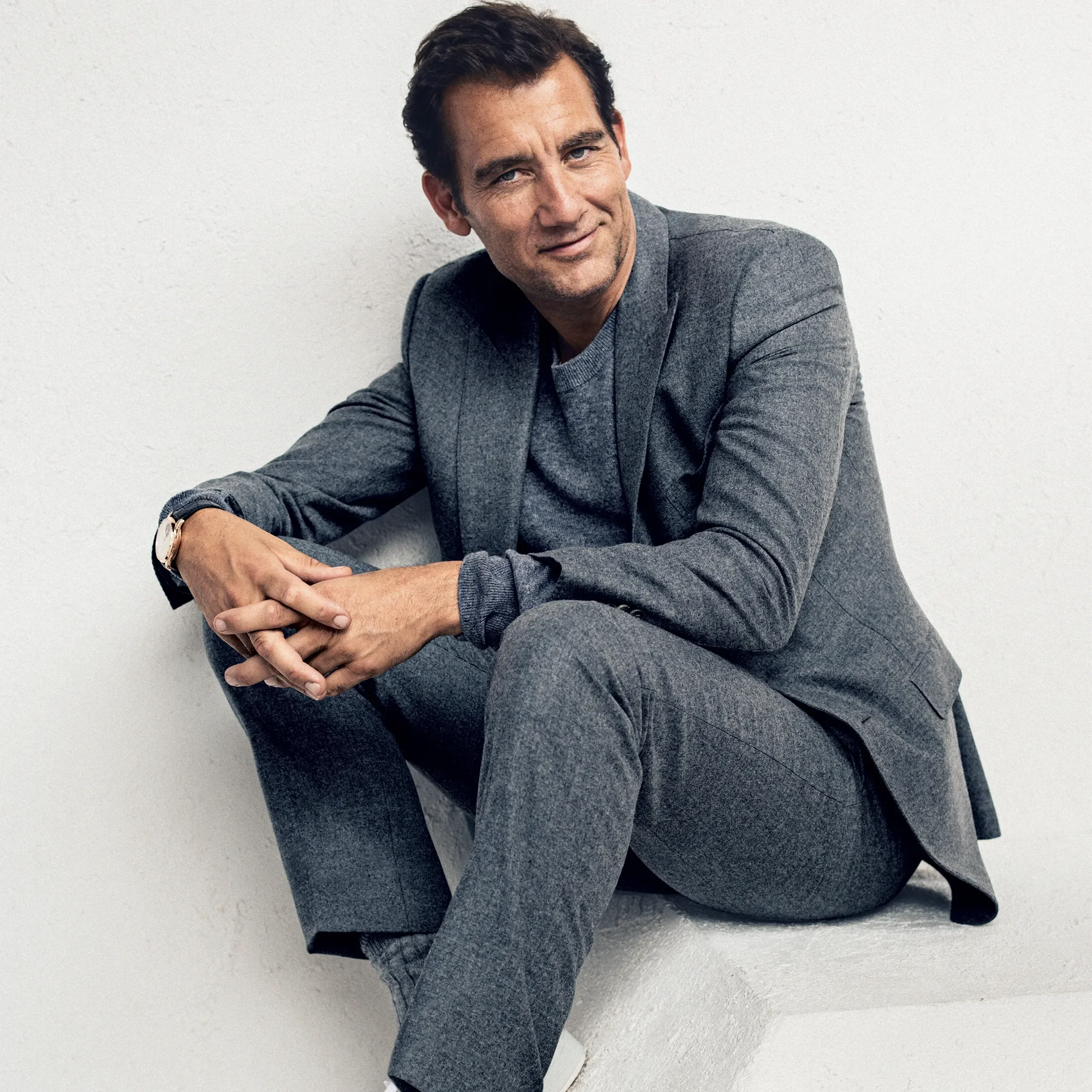
Monochrome dressing means building an outfit from a single color family, using different tints, shades, and textures of that color from head to toe. Instead of thinking “navy suit plus any shirt,” think “navy suit, mid navy shirt, deep navy tie, and dark navy shoes,” all reading as one continuous column of color.
This is different from just wearing a matching suit or a tonal outfit. A matching set is simply jacket and trouser or skirt in the same fabric, while a tonal outfit might mix related colors like navy and light blue or charcoal and soft grey. True monochrome or near monochrome focuses on one clear color center, and everything else supports it rather than competing with it.
In professional environments such as law, consulting, Hill staff, lobbying, media, and corporate leadership, monochrome works because it visually lengthens the body, cleans up visual clutter, and projects confidence without relying on loud prints. When the color story is simple, the eye reads “put together” before it notices any individual item.
Choosing Your Monochrome Power Colors
The most useful monochrome colors for suits and professional attire are the ones that already dominate serious offices: navy, charcoal, mid gray, black, deep brown, deep green, and stone or ivory. These hues look polished, photograph well (think headshots), and can be dialed up or down depending on the day’s stakes.
A few guidelines for choosing your main color or two:
If you live in conservative environments such as Capitol Hill, courts, or major law firms, navy and charcoal are the safest anchors. Tailored well, they look serious, modern, and they adapt to almost any setting where a suit is appropriate.
Black is best reserved for evening events, very formal settings, or when you know your pieces are high quality and well maintained because it highlights lint, fading, and fit issues quickly.
Deep brown and deep green are excellent for those who want to adhere to dress code without being boring, such as senior staffers, policy leaders, or creative professionals who still work with serious clients.
Stone and ivory are spring and summer power moves, ideal for daytime hearings, presentations, or events when you want to stand out in a sea of navy without looking loud.
Skin tone and contrast level also matter. If you have very high contrast such as dark hair and light skin, deep colors like navy and charcoal will frame your features strongly. Lower contrast coloring often looks best in softer versions of the same colors such as mid gray, softer navy, or rich camel.
Once you have one or two anchor colors, you can decide where you want to introduce bolder monochrome. Burgundy, deep teal, or even a strategic red suit can be excellent for keynotes, media hits, and big presentations. Think of these as your spotlight suits rather than daily drivers.
Men’s Monochrome Suit Formulas
For men, monochrome is about controlled variation within one color family. Your suit, shirt, tie, and accessories should feel like they are on the same team. Here are a few dependable formulas.
Navy suit plus mid blue or navy shirt plus deep navy tie
This combination reads decidedly professional, especially in government, finance, or law. Keeping the shirt and tie in the same family but at slightly different depths adds dimension while maintaining unity.
Charcoal suit plus soft grey shirt plus charcoal knit or grenadine tie
This creates an ultra serious, slightly more formal look that works well for court, hearings, or high stakes meetings. The knit or textured tie prevents the outfit from feeling too flat.
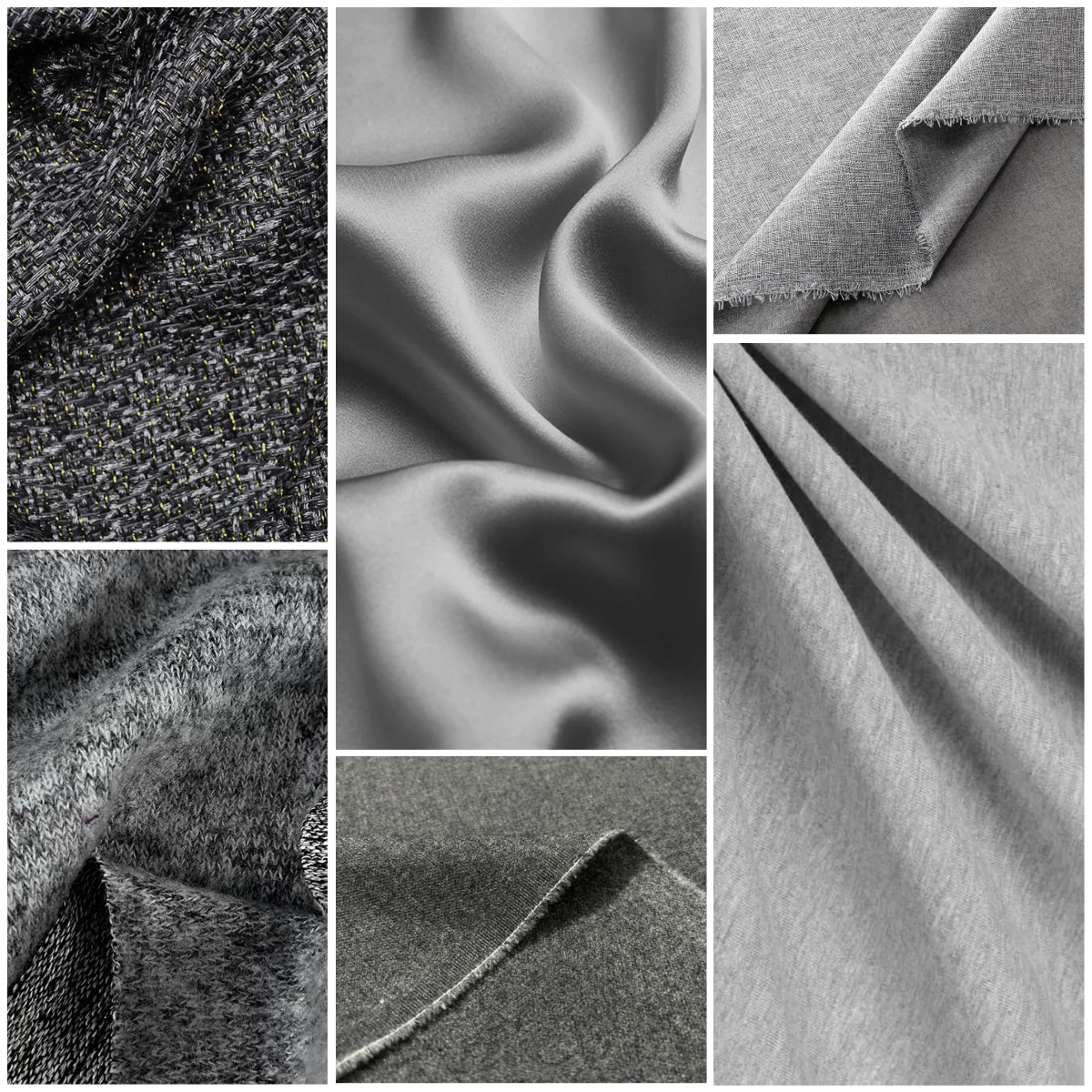
Various gray fabric materials
Mid gray flannel suit plus light grey shirt plus dark grey tie
Perfect for fall and winter, especially if your workday includes both the Hill and evening events. The flannel’s softness visually differentiates the suit from the shirt and tie, even when all are grey.
Texture and Fabric Strategies
Monochrome is most successful when you mix at least two textures such as a smooth worsted wool suit with a crisp poplin shirt and a knit tie. Even if everything is navy, the eye will pick up the subtle difference between matte knits, slight sheen, and brushed surfaces.
You can:
Use a flannel or brushed wool suit with a smoother cotton or cotton blend shirt and a silk knit tie.
Introduce suede or matte leather accessories such as the belt, shoes, or briefcase in the same color family to deepen the look.
Keep patterns minimal since micro texture like a faint herringbone works better than bold stripes or checks when you are learning monochrome.
Shoes, Belts, and Details
Shoes and belts are part of the color story, not an afterthought. In monochrome:
With navy, you can use dark brown or oxblood leather as a near monochrome base that still feels cohesive, or go very dark navy if you own it.
With charcoal and grey, nearly black or deep charcoal shoes keep the line continuous, while mid brown breaks it and draws attention downward.
With brown and green, keep leather within the brown family so the outfit reads intentional rather than random.
Small details such as tie texture, pocket square, and watch strap should echo the main color or sit within a subtle tonal range. High contrast accents defeat the point if the goal is a true monochrome moment.
Women’s Monochrome Suit Formulas
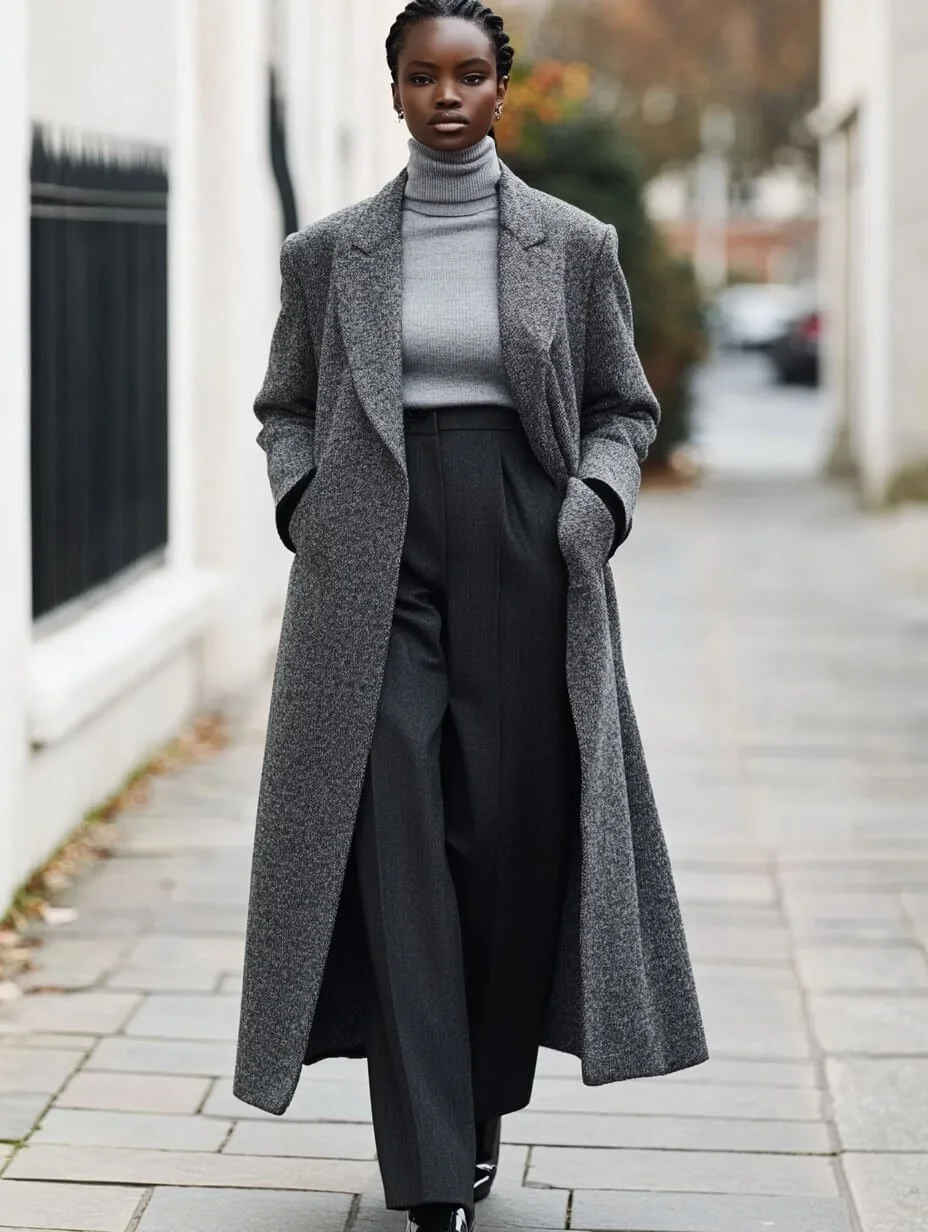
For women, monochrome suiting can be even more versatile because you have more levers to pull such as silhouette, neckline, skirt versus pants, and dresses under jackets. The goal is the same which is one clear color story with subtle variation in tone and texture.
Pantsuits
A navy, charcoal, or deep green pantsuit can be paired with a lighter blouse in the same family such as light blue under navy or soft grey under charcoal for a polished, elongated look. Wide leg trousers can be balanced with a more fitted blazer, while trim cigarette pants pair nicely with a slightly more relaxed jacket.
Skirt suits
A charcoal or navy pencil skirt with a matching blazer and a slightly lighter shell or blouse keeps the line long but adds subtle softness. This works especially well for formal hearings or when you are on your feet speaking, as the monochrome line can look very strong on camera.
Dress and blazer sets
A sheath dress and blazer in the same fabric and color is a powerful monochrome combination, particularly in navy, black, or cream. Adding a slightly different texture such as a silk scarf or a knit shell under an open blazer keeps the look dynamic.
Tops, Shoes, and Accessories
Blouses and shells are where you can create depth:
Under a navy suit, try a mid navy silk blouse or a lighter sky blue shell that still reads as part of the blue family.
Under charcoal, choose soft grey, silver, or even a very subtle grey based print that does not undermine the monochrome effect.
Shoes and bags should support the story:
For navy and charcoal, navy, grey, or black pumps and flats are safe. Going one shade deeper than your suit often looks intentional and elongating.
For brown and green, stick with deep brown leather, suede, or a closely related tone and avoid bright tan if you are trying to keep the focus on the main color.
Handbags that are slightly darker or lighter in the same family keep the outfit cohesive, while high contrast bags are better saved for days when you are not aiming for strict monochrome.
Jewelry can be minimal and metallic. Gold works well with warm palettes like brown and deep green, while silver or white gold suits cooler palettes like navy and charcoal. Think of jewelry as frame and highlight, not the main event.
Fit, Fabric, and Texture Matter Even More in Monochrome
When color is simplified, fit and fabric have nowhere to hide. In a monochrome suit, a too long sleeve, collapsing shoulder, or gaping button is more obvious than in a more visually busy outfit.
Investing in proper tailoring, especially through a specialist like Capitol Hill Clothiers, is therefore critical. A well set shoulder, correct jacket length, properly tuned waist suppression, and trousers or skirts hemmed to the right point make a monochrome look read as sharp instead of uniform like.
Fabric choice is equally important. A sturdy worsted wool will look appropriate year round in navy and charcoal, while brushed flannel can make a winter monochrome look luxurious. Adding knits, silks, and suede within the same color family lets you build visual interest while preserving the single color effect.
Do’s and Don’ts of Monochrome Professional Dressing
Do’s
Do mix textures.
Combine smooth suiting wool with a knit top, silk tie, or suede shoes to prevent your outfit from looking flat or like a uniform.Do vary lightness and darkness within one color family.
Think deep navy suit, medium navy shirt, and slightly darker navy tie, or charcoal suit with soft grey shirt and near black shoes.Do keep silhouettes clean and tailored.
If one piece is relaxed such as wide leg trousers, balance it with a more tailored blazer or structured top.Do match your monochrome to your day.
Darker monochrome such as navy, charcoal, and black works best for high stakes meetings. Lighter or softer monochrome such as stone, mid gray, and soft blue suits daytime, creative work, or internal meetings.
Don’ts
Do not mix clashing undertones in the same color family by accident.
For example, a very cool navy suit with an extremely warm, faded blue shirt can look off rather than intentional.Do not break the line with random loud accents.
A neon tie, bright statement belt, or high contrast bag can undo the sleek effect of monochrome, so save those pieces for non monochrome days.Do not neglect shoes and belts.
Scuffed, worn, or mismatched leather instantly drops the level of an otherwise polished monochrome outfit.Do not rely on all black without strategy.
Black can look incredibly chic, but it magnifies lint, wrinkles, and fading, so you must pay close attention to fabric quality, texture, and maintenance.
Actionable Guide to a Monochrome Capsule with Capitol Hill Clothiers
Think of a monochrome capsule as a mini wardrobe built around one or two power colors, designed so you can get dressed on autopilot and still look deliberate. Capitol Hill Clothiers is particularly well suited to this approach because they can build the pieces around your actual calendar and dress code.
Step 1: Pick Your Anchor Color or Colors

Start with one anchor color you are comfortable wearing in high stakes settings, usually navy or charcoal. If your work involves a lot of media or public speaking, consider adding a second, slightly more distinctive color such as deep green or burgundy for standout days.
Ask yourself:
Which color do you already wear most in suits or jackets
Which color looks best on you in photos and under harsh office or hearing room lighting
Which color feels aligned with your role and seniority, whether more traditional or slightly progressive
Step 2: Plan Your Capsule Before the Fitting
Before meeting with Capitol Hill Clothiers, map out what you need your wardrobe to cover, including hearings, floor days, client meetings, receptions, travel, and media. That list will determine how many pieces your capsule should include.
A solid starter capsule per anchor color might include:
One structured suit jacket
One matching pair of trousers
One matching skirt or an additional pair of trousers in a slightly different cut
One coordinating sheath dress for women or an odd trouser for men to create near monochrome mixes
Two to three shirts or blouses in lighter and darker versions of the same family
One to two fine gauge knits such as a shell, turtleneck, or crewneck that sits comfortably under tailoring
This gives you the ability to create multiple all in one color looks just by rotating tops and layering pieces.
Step 3: Work With Capitol Hill Clothiers on Fit and Fabric
During your appointment, share your chosen anchor color and show a few monochrome inspiration photos so your clothier understands your target mood. Ask specifically for:
A main suit fabric in your anchor color that works year round, which for DC is often a mid weight wool.
A secondary texture in the same color family such as a flannel in navy or charcoal to give you a seasonal or slightly more relaxed option.
Shirts and blouses that sit one to two steps lighter or darker than your suit, all within the same hue.
Have them fine tune:
Shoulder slope, chest and waist shaping, jacket length, and lapel width for your body and role.
Trouser rise and hem break for both men and women to maintain a clean vertical line.
Skirt length and shape for women, ensuring both comfort and camera readiness.
Step 4: Add Supporting Accessories
Use Capitol Hill Clothiers or a trusted retailer to help you fill in accessories that support your capsule rather than compete with it.
For men in each color family:
Two to three ties, including one smoother, one knit, and one with a very subtle pattern that still reads as part of the main color.
One pocket square that is either tonal or just slightly lighter or darker than the suit.
One belt and one or two pairs of shoes that live firmly inside the chosen color story, such as dark brown, near black, or deep oxblood.
For women in each color family:
One or two belts that echo the main color in leather or fabric.
Two pairs of shoes, one lower heel or flat and one higher or more formal, that sit within the same tonal range.
One or two bags that either match or sit just a shade lighter or darker than the suit color, avoiding extreme contrast.
These accessories allow you to repeat the same suit multiple times a week without anyone reading it as the same outfit.
Step 5: Commission a Statement Monochrome Look
Once your core capsule is in place, consider one statement monochrome suit from Capitol Hill Clothiers. This could be:
Deep forest green for big policy announcements
Rich burgundy for panels and keynotes
Ivory or stone for daytime summer hearings or receptions
Ask your clothier to choose fabric and details that are still professional but slightly more directional. You might opt for a slightly broader lapel, a unique but subtle pocket detail, or a standout lining that is only visible when your jacket is open.
FAQs About Monochrome Dressing
Is monochrome too fashion forward for conservative offices?
Not if you stick to classic colors like navy, charcoal, and black and keep silhouettes clean and tailored. In many conservative environments, a navy or charcoal suit with matching or tonal shirt and tie is already standard; you are simply being more deliberate about staying within one color family.
Can I mix black with navy or charcoal and still call it monochrome?
Strictly speaking, that is more near monochrome, but it can still look cohesive and professional if the overall impression is one dominant color. For example, a navy suit with a navy shirt and black shoes reads primarily navy, which is close enough for practical purposes.
What if my current wardrobe is all mixed colors?
Start by choosing one anchor color, usually the suit you reach for most, and build around that. You do not need to replace everything at once; use Capitol Hill Clothiers to create a focused capsule, then phase out items that do not fit the palette as you go.
How many outfits can I get from one monochrome capsule?
A single anchor color with one or two suits, three shirts or blouses, and two knits can easily generate a week or more of distinct looks by changing proportions and textures. Add in a second pair of trousers or a skirt, and you can stretch that even further without feeling repetitive.
Is custom suiting really worth it for monochrome?
Yes, and it may be even more valuable than for a mixed color wardrobe, because fit and fabric are what people notice when color is simplified. A custom suit from Capitol Hill Clothiers that fits flawlessly will always outshine a poorly fitting off the rack monochrome attempt.
Monochrome suiting, done intentionally, gives you a repeatable formula for looking polished on the busiest days with very little mental effort. By anchoring your wardrobe around one or two colors and partnering with Capitol Hill Clothiers to dial in fit, fabric, and texture, you can build a capsule that works from the committee room to the camera and every stop in between.