

How to Shop for Cashmere Sweaters: Quality, Care & Cost
There’s a reason cashmere sweaters have become a wardrobe essential. They’re soft, luxurious, and timeless. But if you’ve ever tried shopping for cashmere, you know that quality can vary dramatically. Some sweaters feel like clouds and last for years; others pill after the first wear. Knowing what to look for before you buy can save you money and frustration. Below, we’ll break down what determines cashmere quality, what those labels actually mean, and how to care for your new sweater so it stays beautiful for years.
How to Shop for Cashmere Sweaters
When you’re shopping for cashmere, think beyond “soft” and “on sale.” A great sweater should flatter your coloring, feel comfortable, hold its shape, and last more than a season. Focusing on color, quality indicators, and fabric composition turns cashmere from an impulse buy into a long-term wardrobe investment.
Start by asking three questions:
Does this color actually suit me?
What does the label say about the material(s) used?
Is there any indication of how the cashmere was sourced and processed?
Those three alone will eliminate a surprising number of options that are more marketing than actual quality.
How to Tell If Cashmere Is Good Quality
Start with Color: Your Personal Palette
Before diving into labels and certifications, begin with color because even the best cashmere sweater is wasted if it doesn’t look good on you. Color analysis gives you a palette of shades that harmonize with your skin tone, hair color, and, to a lesser extent, your eye color, making it much easier to narrow down options. When you know whether you lean warm or cool, soft or bright, you can quickly skip colors that wash you out and focus on those that make you look more awake and polished.
You don’t have to pay someone to do a formal analysis, though it can be helpful. You can learn a lot through trial and error. Holding different colors up to your face in natural light, taking photos, and comparing what makes your features stand out versus what makes you look tired. Once you have a rough palette, shopping becomes more intentional: if a cashmere sweater color doesn’t fit that palette, it’s an easy and guilt-free “no.” As common as online shopping is these days, it’s really worth it to try things on if you’re just starting this process. If you can see every colorway of a sweater on your body and take note of the ones that complement you vs. the ones that don’t it’ll be super valuable for all your future shopping.
What to Look For on Cashmere Labels
Reading the label is one of the fastest ways to tell if a cashmere sweater is worth its price. Truly high-quality pieces will clearly state “100% cashmere” or list cashmere blended with other natural fibers, like merino wool, alpaca, or silk, rather than a mystery mix of synthetics (acrylic, polyester, rayon, nylon, etc.). Vague fiber descriptions or large percentages of synthetics with a tiny percentage of cashmere are a red flag that you’re paying for the word “cashmere” more than the fiber itself.
Some brands genuinely lean on quality and transparency, while others use blends to cut costs and still market a product as a “cashmere sweater.” If a label reads something like “5% cashmere, 95% polyester,” that’s essentially a synthetic sweater with a small amount of cashmere sprinkled in for marketing purposes. Somehow, that’s not illegal. It’s like marketing a bowl of soup as a bowl of salt because of the pinch added for flavor. I digress. Just be sure to do your due diligence and don’t pay a premium for plastic.
Cashmere Grades and Types Explained
Types of Cashmere by Origin
All cashmere comes from the soft undercoat of cashmere goats, but those goats live in different regions and climates, which affects how the fibers feel and behave. Changthangi cashmere, often called Pashmina, is sourced from goats native to the Himalayan region and is widely regarded as some of the finest and softest cashmere available. Its fibers are extremely thin and delicate, which is why Pashmina shawls and scarves have such a light, airy drape.
Much of the world’s cashmere comes from goats in Mongolia and neighboring regions, where cold, harsh climates encourage goats to grow particularly fine undercoats. These fibers are known for combining softness with durability and are often used in high-quality sweaters. Other regions also produce cashmere, with slight variations in thickness and feel, but the overarching theme is this: colder climates generally mean finer, softer fibers.
Cashmere Fiber Grades (A, B, and C)
Cashmere is graded by the thickness of the individual hairs, which directly affects softness, warmth, and longevity. Grade A cashmere uses the thinnest fibers and feels the most luxurious, with a smooth, almost buttery handfeel that still holds structure rather than collapsing into fuzz. Grade B fibers are slightly thicker, offering a balance between softness and durability that can be ideal for everyday sweaters.
Grade C fibers are coarser and thicker still, but even at this level, cashmere is generally softer than standard sheep’s wool. The grading system is similar in spirit to “Super” numbers in wool (Super 100s, Super 120s, etc.), where a higher number typically corresponds to thinner, finer fibers. While the label may not always list the grade, brands that invest in Grade A fibers tend to highlight that fact. f they don’t mention it at all, it’s usually safe to assume the fibers are mid-range or lower. This is not to say it’s bad fabric, but everything has a grade. Think 14k gold vs 18k gold.
Types of Cashmere Sweaters
The way the yarn is spun and the fabric is finished dramatically changes how a sweater looks, feels, and behaves over time. Understanding the main types like classic knit, brushed cashmere, and lightweight versus chunky styles helps you choose something that matches how you actually live and dress, not just what looks good folded on a shelf or on the model online.
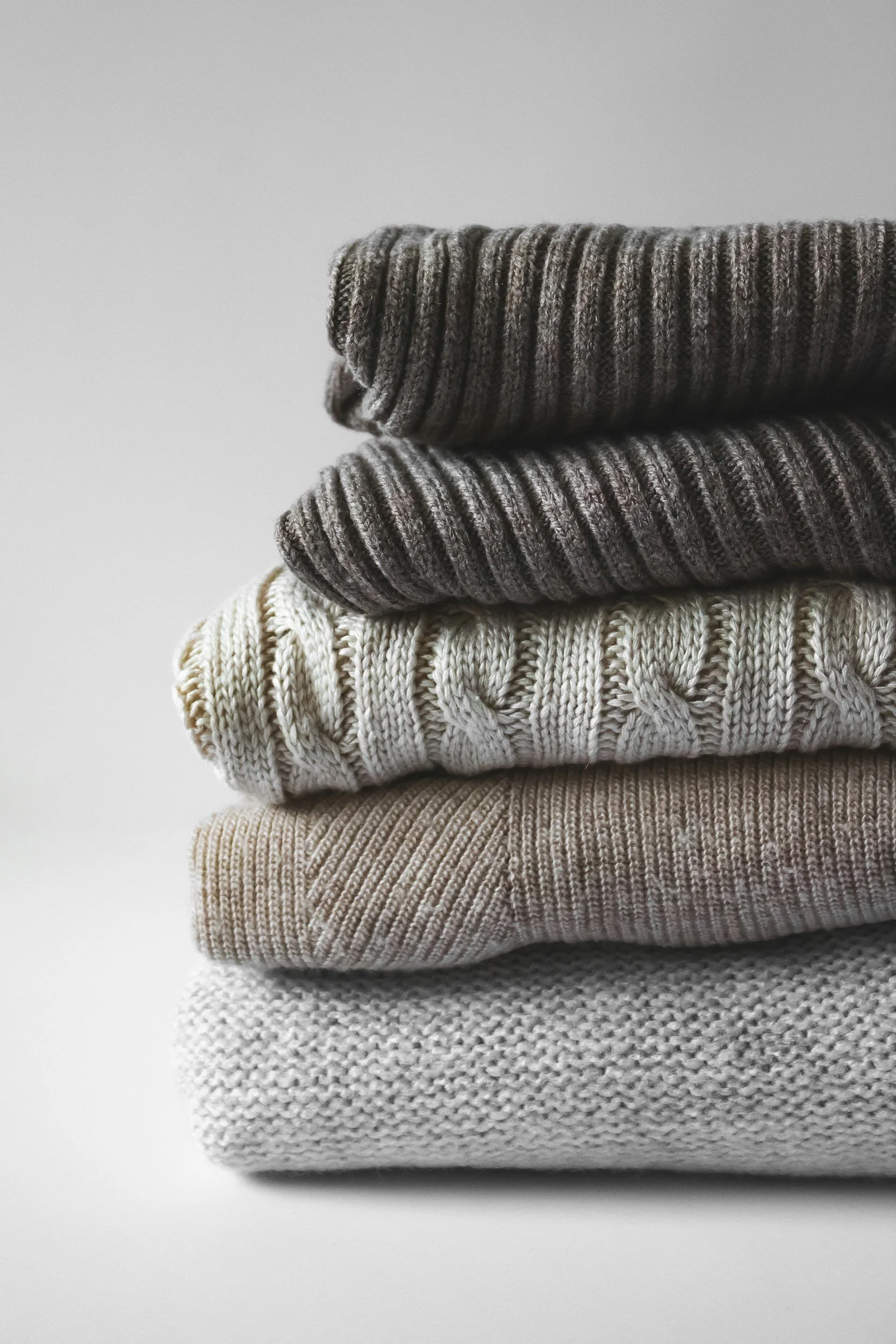
A classic fully fashioned knit cashmere sweater (think crewneck or V‑neck) is usually made from smooth, tightly spun yarn with a clean surface. This is the “everyday” cashmere most people picture: soft, warm, and refined enough to dress up or down. It tends to be more durable and resistant to heavy pilling than loftier finishes, and it’s ideal if you want a reliable workhorse piece that layers easily under jackets or tailoring. If you’re only buying one cashmere sweater, this is often the best starting point.
Brushed cashmere is all about texture. After knitting, the surface is gently brushed to raise the fibers, creating a fuzzy, almost cloudlike finish that feels incredibly cozy. It’s the kind of sweater that looks and feels made for firesides, slow weekends, and winter travel. The trade-off is that those raised fibers are more prone to pilling and may show wear sooner in high-friction areas, so brushed cashmere is best treated as a comfort piece rather than a rough-and-tumble everyday basic. When you try it on, you’ll immediately know if you’re the “live in this all winter” type.
You’ll also see differences in gauge and weight, which change how and when you’ll reach for a sweater. Fine‑gauge cashmere (thin, smooth knits) works well as a base or mid layer and looks sharper under blazers or coats, making it perfect for office wear or travel where you need warmth without bulk. Mid‑ to chunky‑gauge cashmere, on the other hand, is what you want for that substantial, almost jacket-like feel. A cashmere turtleneck or heavy cardigan you can throw on in place of outerwear on milder days. Both have their place, but if your climate runs cold, a heavier gauge in a color that suits you will get a lot of wear.
You should also think about the design details: turtlenecks versus crewnecks, cardigans versus pullovers, and relaxed versus tailored fits. A turtleneck in brushed or mid‑gauge cashmere reads cozy and intentional, while a classic crewneck in smooth, fine‑gauge cashmere pairs easily with everything from denim to tailoring. Cardigans give you flexibility with temperature (and are forgiving for at‑home wear), while a trim pullover feels more polished. Once you understand how finish and weight influence both comfort and appearance, you can choose types of cashmere sweaters that fit seamlessly into your daily rotation instead of living at the back of a drawer.
Cashmere Blends: What’s Worth Your Money
100% Cashmere vs Cashmere Blends
One of the biggest pitfalls when shopping for cashmere sweaters is the rise of synthetic-heavy blends marketed as luxury garments. A sweater can legally be sold as “cashmere” even if only a tiny fraction of the fabric is actually cashmere, as long as the fibers are listed somewhere on the content tag. Like I mentioned above, this is how you end up with sweaters that are mostly polyester or acrylic with a token 5% cashmere content, which do not feel, breathe, or age like true cashmere pieces.
A high-quality cashmere sweater will either be 100% cashmere or blended with other natural fibers to enhance certain qualities. Merino can add structure, alpaca can add extra warmth, and silk can add sheen and drape. These natural blends still allow the fabric to breathe while maintaining softness and comfort against the skin. By contrast, synthetic-heavy blends are more prone to pilling and often feel clammy or overly hot because they don’t manage moisture or temperature as well.
Certifications: The Good Cashmere Standard, OEKO‑TEX, and GOTS
Why Certifications Matter
Certifications can help you quickly identify brands that take fiber quality, ethics, and safety seriously. One of the most relevant for cashmere is The Good Cashmere Standard, which focuses on animal welfare, environmental protection, and improving the working conditions of farmers along the supply chain. Seeing this standard on a label indicates that the cashmere has been audited against specific criteria for responsible production.
Beyond fiber origin, it’s helpful to consider what happens during processing and finishing. OEKO‑TEX Standard 100 is a widely recognized label that confirms a textile product has been tested for harmful substances and found to meet specific human-ecological safety requirements. GOTS (Global Organic Textile Standard) goes even further for organic textiles, setting rules not only on the organic status of fibers but also on environmental and social criteria in processing. These labels together give you a more complete picture of what you’re putting on your skin.
How to Use Certifications When Shopping
When you encounter a brand that highlights The Good Cashmere Standard, OEKO‑TEX Standard 100, or GOTS, that’s usually a sign they prioritize transparency and traceability in their supply chain. The Good Cashmere Standard focuses specifically on responsible cashmere production, while OEKO‑TEX and GOTS address chemical safety and broader sustainability and labor practices in textiles. A sweater that combines these certifications has likely been through multiple layers of scrutiny, from goat to garment.
This doesn’t mean uncertified sweaters are automatically poor quality, but certifications can help you compare options and justify higher prices when you’re on the fence. If two pieces look similar but only one has clear, reputable certifications and labeling, that extra clarity is often worth paying for. With luxury fibers like cashmere, peace of mind about both quality and ethics is part of the value.
Why Cashmere Is So Expensive
Cashmere is not pricey purely because of branding. It is genuinely scarce and labor-intensive to produce. A sheep can yield a large amount of wool per year, but a cashmere goat produces only a small amount of the fine undercoat used to make garments. Collecting this undercoat typically involves combing the goats during molting season, which is slower and more delicate than shearing sheep.
It can take the annual output of multiple goats to make a single high-quality sweater, and that’s before factoring in the cleaning, sorting, spinning, dyeing, and knitting. Each step requires care to avoid damaging the fine fibers. All of this adds up to a higher cost but also to a garment that, when properly made and cared for, offers a level of softness, lightness, and warmth that standard wool simply can’t match.
How to Care For and Wash Cashmere at Home
Basic Care Principles
Good care extends the lifespan of your cashmere and keeps it looking polished rather than tired. Most cashmere pieces come with a care tag that leans conservative, often recommending dry cleaning, because it’s the lowest-risk option from the manufacturer’s perspective. Following the tag is always the safest bet, especially for your first wash.
If the sweater allows hand or machine washing, treat it gently. Use cold water and a mild detergent formulated for delicates or wool, and avoid harsh agitation and hot temperatures. Instead of wringing the sweater out, gently press out excess water with a towel, then lay it flat on a clean surface to dry, reshaping it as needed. This helps protect the fibers and prevent stretching.
Washing Cashmere in the Machine
If you choose to machine wash, use a delicate or wool cycle, cold water, and a mesh laundry bag to reduce friction. Turn the sweater inside out to minimize surface wear. Skip the fabric softener and the dryer; both can damage the fibers and shorten the life of the sweater. Once washed, remove it from the machine promptly, press it in a towel to remove moisture, and lay it flat to dry.
Over time, even high-quality cashmere will develop some light pilling in areas of friction, such as under the arms. This is normal and can be carefully removed with a cashmere comb or fabric shaver. The key is to be gentle. Aggressive de-pilling can break fibers and weaken the fabric. With thoughtful washing and occasional maintenance, a good cashmere sweater will only get softer with age.
Choosing Trusted Cashmere Brands
When deciding where to buy, let fiber content, certifications, and transparency guide you more than hype or trendiness. Brands that highlight where their cashmere comes from, how it’s processed, and which standards they meet are usually more focused on long-term quality than quick-profit marketing. Clear labeling, responsive customer service, and honest education around their products are all good signs.
Capitol Hill Clothiers, for example, offers made-to-order men’s and women’s cashmere sweaters crafted in the U.S. at a price point that reflects both the quality of the fiber and the labor required to make each piece. Whether you shop here or elsewhere, look for brands that treat cashmere like the premium, finite resource it is. Something to be sourced responsibly, made well, and worn often.