
How to Dress as an Attorney in Washington, DC
In Washington, DC, your suit is your résumé, your armor, and your first argument to a judge, opposing counsel, or a senior partner. The city’s legal culture is one of the most conservative in the country, blending federal formalism with the high-stakes expectations of Big Law, government counsel, and lobbying firms. Dressing correctly is a professional requirement to prove your competence, respect for the institution, and readiness for the room.
For both men and women, the baseline is business professional: a well-fitted dark suit, crisp shirt or blouse, conservative tie (for men), closed-toe leather shoes, and minimal, polished accessories. Anything less can undermine your credibility and potentially affect the outcome of the case.
The courtroom baseline: what judges expect
Federal and DC Superior Court judges expect attorneys to wear standard business attire, and the rules are strict. Jeans, sneakers, tank tops, revealing necklines, shorts, and hats are not allowed. For men, the requirement is a suit with coat and tie or a coat and tie with tailored slacks or khaki pants. For women, it is a tailored suit (pantsuit or skirt suit) or a tailored dress with a blazer.
The suit should be dark and solid: navy or charcoal gray are the gold standards. Black is acceptable but can look severe in daylight; navy and charcoal photograph better on video and under courtroom lighting. The jacket should be single-breasted with a notched lapel, and the trousers should have a clean line with a slight break at the shoe.
A white or light blue dress shirt for men and a white, ivory, or pale neutral blouse for women are the expected choices. Ties should be conservative: silk, 3–3.25 inches wide, with subtle stripes, grenadine weaves, or small repeating patterns. No loud colors, novelty prints, or overly wide or skinny ties.
Shoes must be closed-toe leather. For men, black or dark brown cap-toe Oxfords or Derbys with Goodyear welt construction are best. For women, closed-toe heels (1–2 inches) or polished flats in black, navy, or nude. No loafers, no suede in court, no exposed toes, no athletic soles (glaring at you, Cole Haan).
Big Law and client-facing days
In DC’s large law firms, the courtroom standard often bleeds into the office, especially for associates and anyone with client or Hill meetings. The expectation is the same: a tailored dark suit, pressed shirt or blouse, conservative tie, and leather shoes. Even on “casual Fridays,” many DC firms expect suits if you have any external meetings.
When you are not in court but meeting a client, a congressional staffer, or a regulator, you can add a small touch of personality, but the foundation remains conservative. A black sheath dress with a tweed or wool blazer, a charcoal suit with a subtle micro-check shirt, or a navy pantsuit with a silk blouse all work well. The key is that your clothes look pressed, intentional, and professional, not trendy or experimental.
Women have slightly more flexibility in silhouette (pantsuit vs. skirt suit, sheath dress vs. separates), but the rules on fit, fabric, and modesty are strict. Skirts should be knee-length or slightly below, never mini. Blouses should button appropriately, with no low necklines or sheer fabric without a camisole. Jewelry should be understated and dainty, not flashy.
Keep in mind, the pandemic changed a lot of workplace norms, and many law offices have significantly relaxed their day-to-day attire requirements. I tend to recommend erring on the side of caution and dressing more professionally than not, just in case a client meeting arises. Some of my clients keep a few jackets/shirts in their offices for just such occurances.
Government, public interest, and in-house roles
Government attorneys, public defenders, and in-house counsel at federal agencies or regulated industries often have a slightly more relaxed day-to-day, but the standard remains business professional when interacting with银 officials, judges, or external clients.
In many DC government offices, you might see business casual on internal days: tailored trousers or a modest skirt with a blazer and a button-down or knit top. However, you should always keep a full suit and tie in your office or bag, because a last-minute meeting with a senior official or a surprise courtroom appearance can happen with little warning.
A useful rule: dress one notch above the most conservative person in the room. In DC, that person is often someone from the Department of Justice, a federal agency counsel, or a senior partner at a top firm.
Business casual in DC legal settings
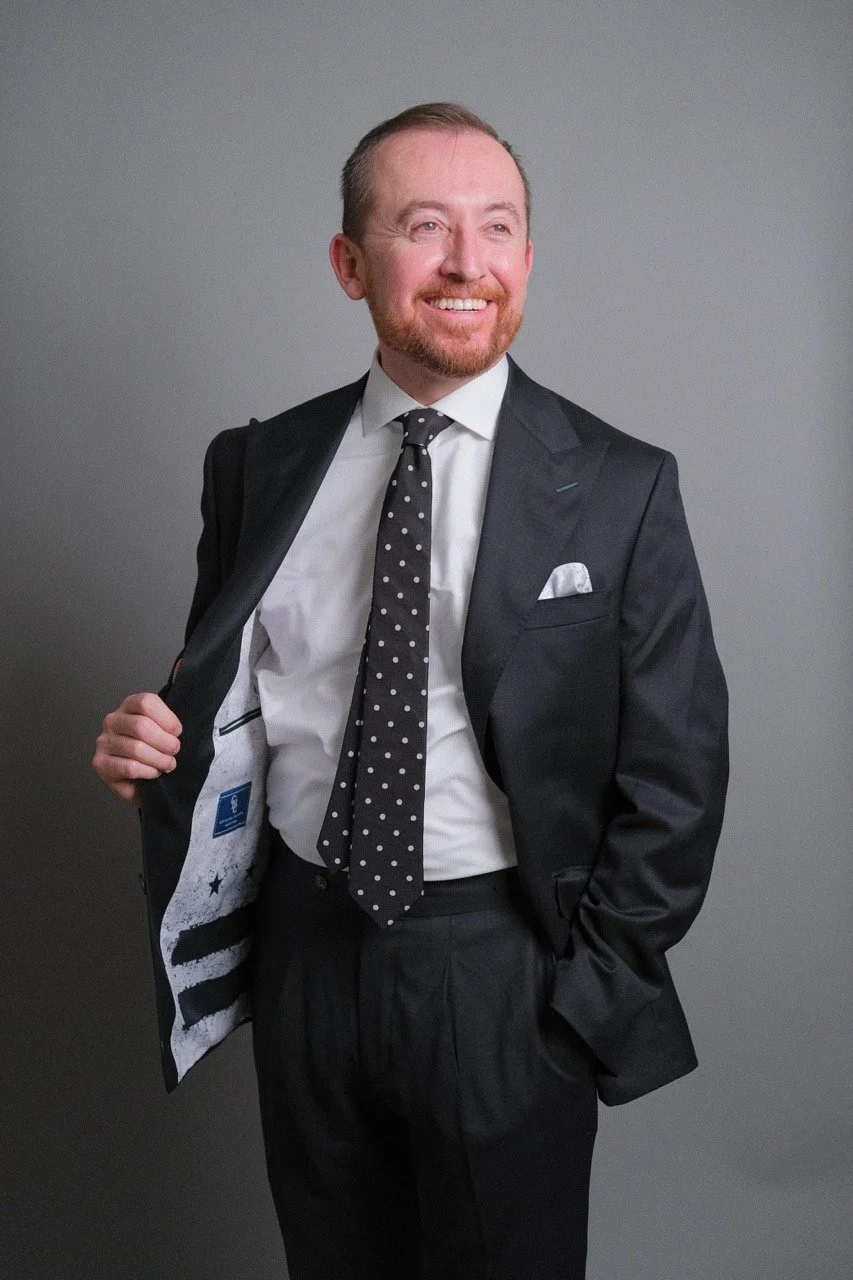
A Capitol Hill Clothiers custom suit appropriate for the courtroom
For Men
Dress trousers or chinos in navy, gray, or khaki, a pressed button-down or fine knit, a blazer or sport coat, and leather shoes (Oxfords, derbies, or clean loafers). No jeans, no sneakers, no athletic wear.
For Women
Tailored trousers or a modest skirt with a blouse, knit top, or sweater, optionally with a blazer, and closed-toe flats or low heels. Dark, clean denim is sometimes acceptable in very creative or tech-focused legal roles, but only if paired with a blazer and polished shoes.
Even in business casual, the goal is to look ready for court. Many DC attorneys keep a suit and tie at the office for this reason.
Menswear specifics: suits, shirts, ties, and shoes
For men, the essential wardrobe includes:
1–2 tailored dark suits (navy and charcoal), single-breasted, notched lapel, with trousers that end with a slight break.
3–5 non-iron dress shirts in white and light blue, poplin or twill, with barrel cuffs or French cuffs for special occasions.
2–3 conservative ties in silk: grenadine, classic stripes, or small repeating patterns, no novelty prints.
Black and dark brown leather shoes: cap-toe Oxfords or Balmorals, Goodyear welted, with leather soles or high-quality durable soles. No square toes, no rubber-soled “dress” sneakers.
Over-the-calf socks in dark colors to ensure no skin shows when you sit.
Leather belt matching your shoes, minimal hardware.
Fit is critical. Off-the-rack suits rarely accommodate athletic shoulders, a muscular chest, or a long torso. If your jacket pulls across the chest, your shoulders sag, or your trousers gap at the waist, you already look less authoritative.
At Capitol Hill Clothiers, I specialize in custom suits for attorneys in DC. We draft your suit to your exact shoulders, chest, and posture so the jacket lies flat, the lapels stay smooth, and the trousers fit your waist and thighs without pulling. We bring fabrics and fittings to your home or office, so you can build your courtroom wardrobe around your schedule.
Womenswear specifics: suits, dresses, blouses, and shoes
For women, the essential wardrobe includes:
1 pantsuit and 1 skirt suit in navy, charcoal, or black, hip-length blazer with a real lining, no shoulder ruffles or extreme tails.
3–5 blouses in cotton, silk, orJersey, in white, ivory, pale blue, or other neutral tones, with no bold prints or low necklines.
1–2 sheath dresses in conservative cuts, knee-length or slightly below, worn with a blazer or structured cardigan.
Closed-toe heels (1–2 inches) in nude or black, or polished flats, with sheer tights if wearing a skirt in cooler months.
Structured handbag or briefcase large enough to carry documents and a laptop.
Discreet jewelry: small studs, a simple pendant, a thin watch, nothing loud or distracting.
Women with curvier frames or athletic builds often struggle to find off-the-rack suits that fit both the hips and the waist. Custom solves this. We draft room where you need it (hips, bust, thighs) and shape the waist so the suit looks tailored, not billowy or tight.
At Capitol Hill Clothiers, we create custom women’s suits that accommodate your exact proportions, from athletic builds to pear-shaped figures. Our concierge service brings fabrics and fittings to you in DC, Maryland, or Virginia, so you can design suits that finally fit and project authority.
Fabric choices for DC’s climate and culture
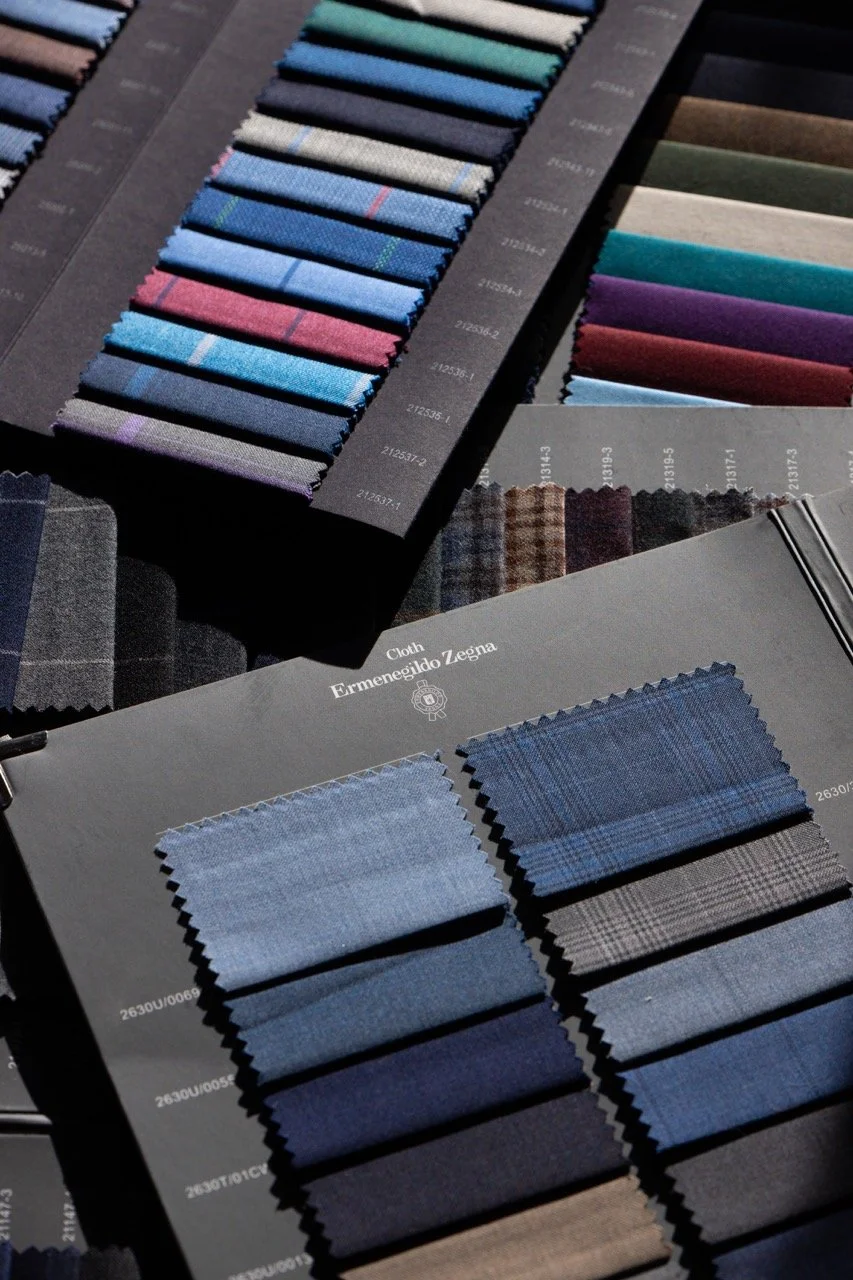
Fabric swatches for custom suits in Washington DC
DC has hot, humid summers and cold, occasionally snowy winters. Your fabric choices should reflect that.
Spring and Summer
Lightweight to medium-weight wool in breathable weaves (such as high-twist Fresco) for suits that resist wrinkles and breathe.
Wool-silk or wool-linen blends for blazers and sport coats in business-casual settings. Pure linen is too wrinkly for frequent courtroom use, but a linen blend with wool or silk reduces wrinkling while keeping breathability.
Light colors like medium gray, lighter navy, and soft blues work well, but stay in conservative tones.
Fall and Winter
Medium-to-heavyweight wool in worsted or flannel for warmth and structure.
Wool-cashmere blends for overcoats and suits where you want extra warmth without bulk.
Dark navy, charcoal, and subtle texture for a serious, authoritative look.
Avoid synthetic materials entirely. Synthetics like polyester trap heat, hold sweat, develop an unnatural sheen, pill, and lose their shape. They do not breathe like natural fibers and often look cheap under courtroom lighting or on video conferences. For custom legal attire that lasts, stick with wool, cashmere, cotton, silk, and their natural blends.
Common style mistakes DC attorneys make
Even experienced attorneys make predictable mistakes that undermine their professional image.
Wearing a suit that does not fit
A suit that is too tight across the chest or shoulders, or too loose at the waist, makes you look unprepared. Judge and client perceptions are shaped by how polished you look before you speak.
Choosing the wrong tie or shirt
Loud tie patterns, overly wide or skinny ties, shiny synthetic fabrics, or shirts with extreme collars (cutaway or seventies styles) look unprofessional. Stick to conservative widths, natural fibers, and subtle textures.
Inappropriate shoes
Sneakers, loafers in court, square-toed shoes, or rubber-soled “dress” shoes undermine a serious look. Invest in proper leather Oxfords or closed-toe pumps.
Wearing jeans anywhere near court
Jeans are not acceptable in DC courtrooms and can look sloppy even in some firm settings. If your office allows dark jeans on internal days, pair them with a blazer and polished shoes, but never wear them to court or client meetings.
Relying on off-the-rack for key pieces
If you have an athletic build, strong shoulders, a muscular chest, curvier hips, or a long torso, off-the-rack suits and shirts will always require compromises. Custom removes those compromises.
Building your attorney wardrobe step by step
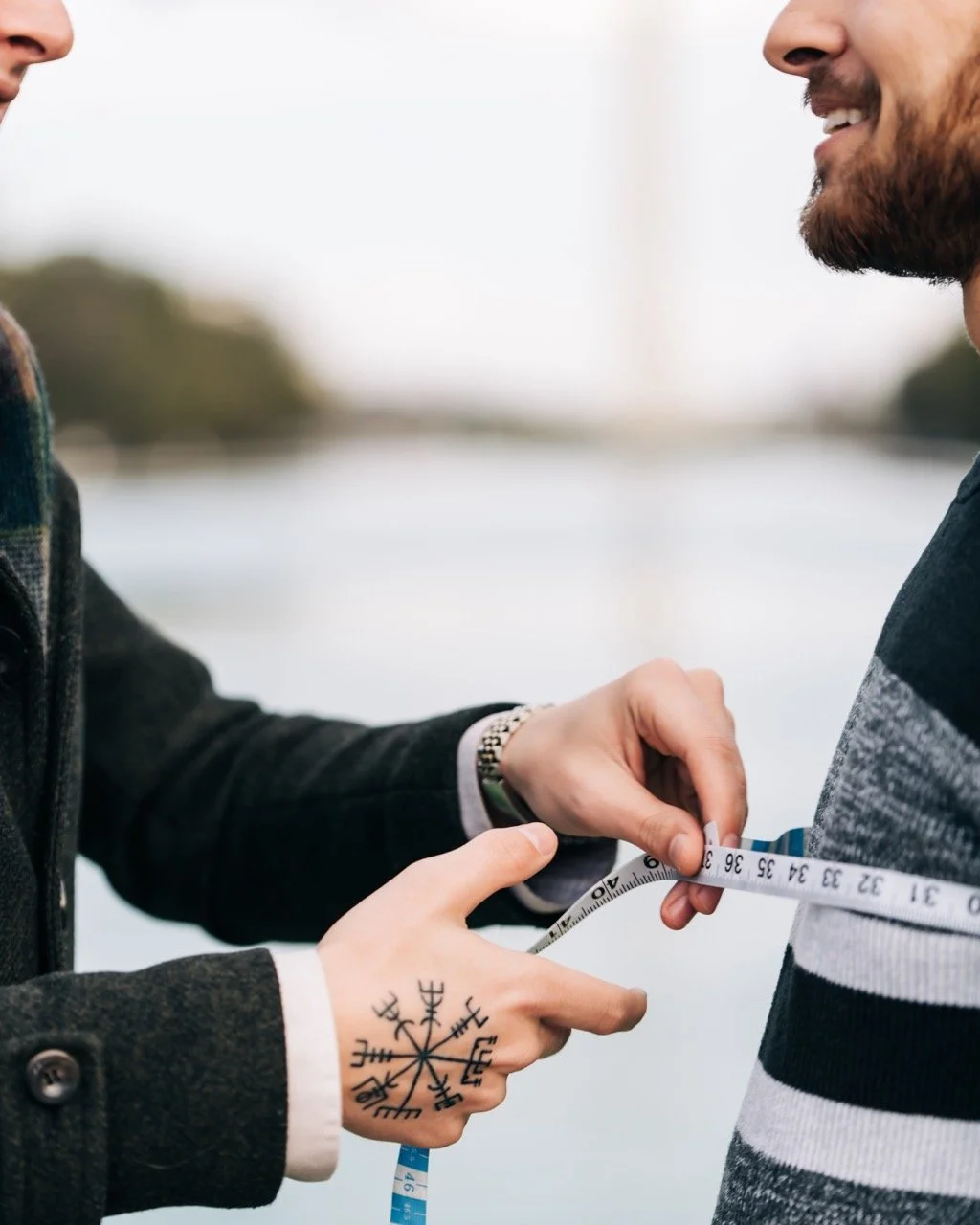
Custom suit fitting by Capitol Hill Clothiers
Start with a core capsule that covers court, client meetings, and office days:
Men: 1 navy suit, 1 charcoal suit, 3 white/light blue shirts, 2–3 conservative ties, black and brown leather shoes, over-the-calf socks, leather belt.
Women: 1 pantsuit, 1 skirt suit, 3–5 blouses, 1–2 sheath dresses, closed-toe heels and flats, structured bag, sheer tights, discreet jewelry.
Once your core is in place, expand with season-appropriate suits, blazers, and overcoats. Add a lightweight wool or wool-blend suit for summer and a heavier wool or wool-cashmere suit for winter.
If you are in the DC, Maryland, or Virginia area and want your legal wardrobe to fit perfectly from the first day, I invite you to work with us at Capitol Hill Clothiers. We design custom suits, dress shirts, and overcoats specifically for attorneys who need to look authoritative in court, on the Hill, and in client meetings.
FAQ: Dressing as an attorney in Washington, DC
What is the default dress code for attorneys in DC?
The default is business professional: a dark suit (navy or charcoal), pressed shirt or blouse, conservative tie for men, closed-toe leather shoes, and minimal accessories. This applies in court, at client meetings, and in most Big Law offices.
Can I wear jeans as an attorney in DC?
Jeans are not acceptable in court and are generally discouraged in client-facing or formal office settings. Some firms allow dark, clean jeans on internal days with no meetings, but always pair them with a blazer and polished shoes.
What color suit should I wear to court?
Navy and charcoal gray are the best choices. Black is acceptable but can look severe in daylight. Avoid light colors, loud patterns, or pinstripes that are too bold for courtroom settings.
What shoes should I wear as a male attorney?
Black or dark brown cap-toe Oxfords or Balmorals with leather soles, Goodyear welted construction, and over-the-calf socks. No loafers, no sneakers, no square toes in court.
What shoes should I wear as a female attorney?
Closed-toe heels (1–2 inches) in black, navy, or nude, or polished flats. Skirt suits should be paired with sheer tights in cooler months. No open toes, no sandals, no athletic shoes in court.
What tie is appropriate for court?
A conservative silk tie, 3–3.25 inches wide, with subtle stripes, grenadine weaves, or small repeating patterns. Avoid loud colors, novelty prints, or overly wide or skinny ties.
Can women wear pantsuits in court?
Yes. In DC courts, women are expected to wear tailored suits, which include both pantsuits and skirt suits. A pantsuit in navy, charcoal, or black with a conservative blouse is fully appropriate.
What fabric is best for a DC attorney’s suit?
Lightweight to medium-weight wool in breathable weaves for spring and summer, and medium-to-heavyweight wool or wool-cashmere blends for fall and winter. High-twist wool resists wrinkles and is excellent for travel and long days. Avoid synthetic materials entirely.
Do I need custom suits if I am not in court every day?
If your suits pull across the chest, gap at the waist, or feel uncomfortable when you sit or move, custom is worthwhile even for infrequent court appearances. In DC, your suit signals competence in every meeting, not just in court. Custom ensures your suit fits your shoulders, chest, and posture perfectly.
How can I get custom suits for court in DC?
I can meet you at your home or office in Washington, DC, Virginia, or Maryland to design custom suits, dress shirts, and overcoats specifically for attorneys. Contact us at Capitol Hill Clothiers to start your custom legal wardrobe.