
How to Use a Pocket Square
A pocket square is a small detail with an outsized effect. It can make a navy suit feel more complete, give a sport coat personality, or bring a little refinement to a formal jacket without changing the rest of your outfit.
The key is restraint. A pocket square should complement the outfit rather than compete with it. Its fold, fabric, color, and amount of visible cloth should match the setting, from courtrooms and client meetings to weddings, dinners, and weekends. As a general guide, simpler folds read more formal, while softer or more elaborate folds feel more relaxed and expressive.
Choosing the Right Pocket Square for Your Suit or Sport Coat
Before choosing a fold, choose the fabric. White linen or cotton is the most formal and versatile option. It holds a clean crease, works with virtually any suit color, and is especially useful for court appearances, interviews, formal business settings, and weddings.
Silk is softer and more expressive. It works beautifully with a sport coat or suit for dinners, receptions, celebrations, and polished business-casual settings. Its natural sheen and movement make it better suited to puffed or pointed folds than a perfectly crisp straight edge.
Wool, wool-silk, and linen-silk blends add texture. These fabrics are ideal in fall and winter, or whenever you are wearing a textured jacket such as flannel, herringbone, tweed, or hopsack. They are particularly good for relaxed folds because the cloth has enough body to look intentional without appearing stiff.
A pocket square is decorative, not a handkerchief. Keep a separate handkerchief in a trouser or inner jacket pocket if you need something practical.
Best Practices for Wearing Pocket Squares
First, common pocket-square mistakes
The most common mistake is matching the square to the tie exactly. I’m sure we’ve all seen those box sets with a tie and pocket square made of the exact same patterned material. Don’t buy those and don’t try to perfectly match your tie and pocket square. Though the intention is to look coordinated, it ends up looking lazier than not having a pocket square at all. Instead, find a color that complements your tie, shirt, or suit. Something a little different.
Another one is overstuffing the pocket. A square should sit inside the breast pocket, not balloon outward. Usually, only about one to one-and-a-half inches of fabric needs to show, and less is often more in formal contexts.

Pocket square too far out of the pocket
A mistake I see often is choosing the wrong fold for the occasion. A dramatic, multi-peak fold may work at a wedding but can look distracting in a serious professional environment. Similarly, an extremely crisp white presidential fold can feel overly formal with a casual linen sport coat and sneakers.
Finally, do not treat the pocket square as an obligation. If you are uncertain, a simple white linen presidential fold is always safe with a suit. If you are wearing an open collar and a more relaxed jacket, a soft puff in silk or wool-silk is usually the most natural place to start.
Mix Patterns With Care
Pattern mixing is both an art and a science and mostly applies to the tie selection, less so for the pocket square. There are still some pairings to be avoided at all costs (matching fabrics) and other rules that can be bent situationally. Here are the basics.
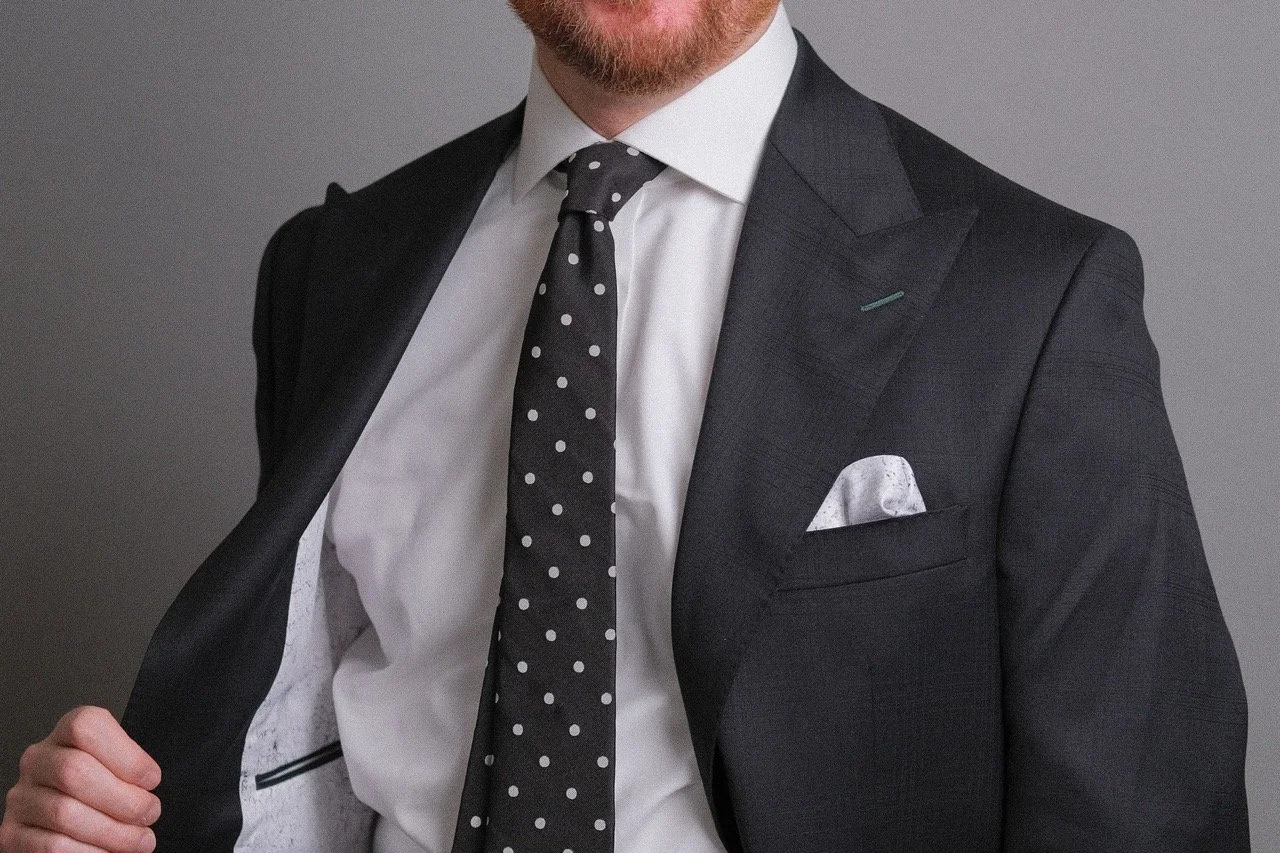
Plain Jacket: If you have a solid colored suit or blazer, you’re able to add some pattern, texture, and/or contrasting color to your pocket square. As long as it also complements your tie, you’re good to go.
Striped Suit: Pocket squares generally don’t come in striped patterns, so the rule here is similar to the plain fabric pairing. I would avoid a bold check but otherwise, you can follow the same strategy as above.
Checked Jacket: If your suit or sport coat is checked, plaid, windowpane, or any other 90 degree angle-based pattern, you’ll be safe with a solid, subtle paisley, dotted, or abstract pocket square. You don’t want to compete with the pattern of the main garment, just accent it.
Abstract Jacket: If your jacket is made of a busy fabric (like a brocade or a printed design), your best bet is to go for a solid pocket square. Similar to the above, let the main garment shine and let the square provide a subtle accent.
Now that you’ve run your options through that filter, let’s do it again with the shirt and tie. This is arguably the more important pairing, as poorly paired non-suit elements can often fight for attention in a suit look.
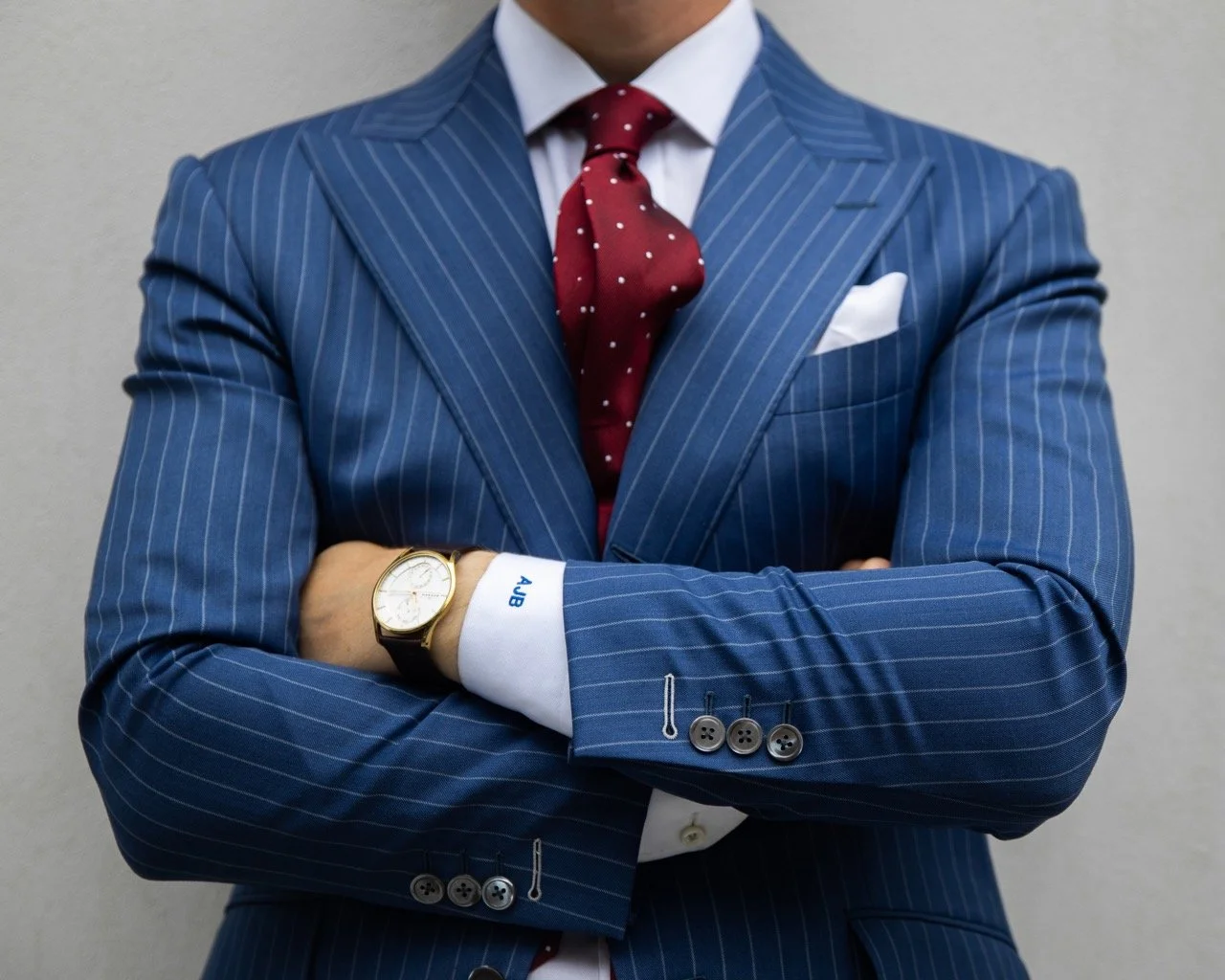
Plain Tie: Your pocket square can coordinate with the shirt underneath or have a pattern that complements or partly matches the tie color.
Plaid Tie: Choose one of the colors in the tie’s plaid and make that the focal color of the square.
Dotted/Medallion Tie: Similar to the plain tie, though you can also use a square that is similar to or matches the dot color
Striped Tie: Similar to the plaid tie, you can choose a color in the stripe pattern for your square.
Make the details personal
A well-chosen pocket square is a small but meaningful expression of personal style. It is often the detail that makes an outfit feel complete, particularly when you are wearing a custom jacket that already fits your shoulders, posture, and lifestyle.
At Capitol Hill Clothiers, we can help you build a wardrobe of custom suits, sport coats, and shirts with pocket-square styling in mind. During your fitting, we can discuss the fabric textures, colors, and jacket proportions that make accessories feel natural rather than added on.
How to Fold a Pocket Square
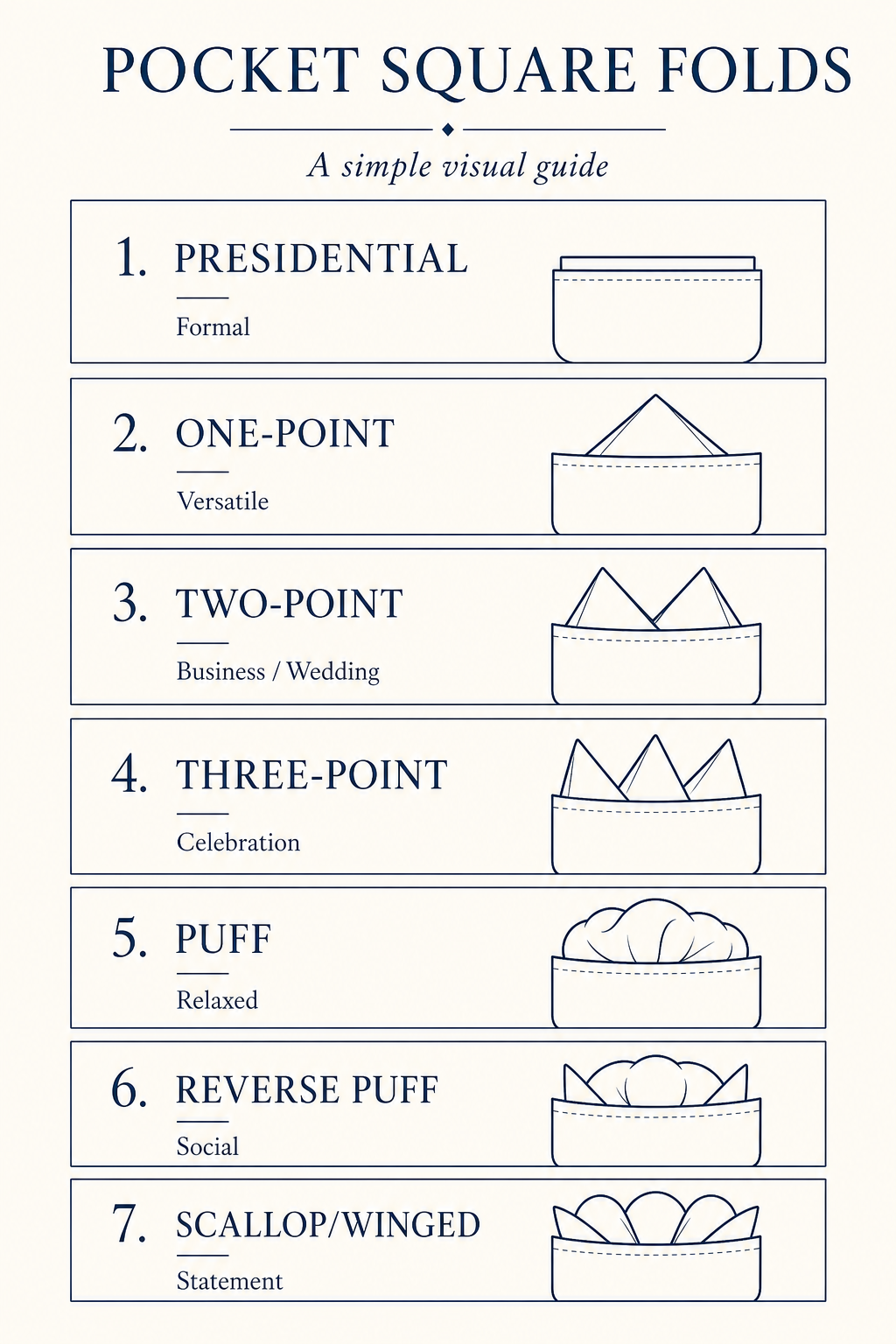
The presidential fold
The presidential fold, also called the flat fold or straight fold, is the cleanest and most formal option. Fold the square into a small rectangle, then place it in the breast pocket so that only a narrow, straight line is visible above the pocket.
This is the fold for white linen or cotton. It is appropriate for interviews, court appearances, board meetings, conservative offices, black-tie events, and formal weddings. A thin reveal, generally around a quarter to half inch, looks refined and avoids turning the square into the center of attention.
For attorneys, government professionals, and anyone working in a conservative DC environment, this is the fold to master first. It signals care and polish without looking overly styled.
The one-point fold
The one-point fold is classic, versatile, and slightly more expressive than the presidential fold. It creates a single clean triangle above the pocket, offering a more obvious touch of color or texture without becoming dramatic.
Use it for weddings, client dinners, networking events, business presentations, and polished social occasions. It works especially well with a silk, linen, or wool-silk square. A solid, lightly textured, or small-patterned square will give the fold visual interest while keeping the overall look controlled.
A one-point fold is also a strong choice for someone who is new to pocket squares. It looks intentional with a suit and tie, but it also works with an open-collar shirt and sport coat.
The two-point fold
The two-point fold, sometimes called the twin-peak fold, creates two peaks that sit beside one another. It is a little more dimensional than the one-point fold but remains professional when executed neatly.
This is an excellent choice for business functions, cocktail attire, weddings, and celebratory dinners. It gives a classic navy or charcoal suit a little more visual depth and works well with silk or linen-silk squares.
Use a two-point fold when you want to show personality without looking theatrical. Keep the peaks relatively low and uneven in a natural way. Perfect symmetry can look overly engineered.
The three-point fold
The three-point fold introduces more shape and becomes more decorative. It can look excellent for a wedding, gala, holiday party, formal dinner, or evening event, especially when paired with a well-fitted suit or tuxedo-style dinner jacket.
Because it draws attention, keep the rest of the outfit simple. A solid suit, crisp white shirt, and subtle tie provide the right canvas. Avoid combining a three-point fold with a loud tie, a heavily patterned shirt, or an aggressively patterned suit. One statement at a time is enough.
This fold is best for someone who is already comfortable with tailored clothing and wants to elevate a special-occasion look. It is less appropriate for a courtroom, a conservative client meeting, or a first interview.
The puff fold
The puff fold is relaxed, effortless, and one of the best ways to wear a soft silk or wool-silk pocket square. Pinch the fabric near the center, lift it, gather the lower portion, and tuck it into the breast pocket so a rounded puff of fabric remains visible.
Use the puff fold with sport coats, open-collar shirts, knit polos, and softer tailoring. It is ideal for dinners, date nights, art events, weekend gatherings, outdoor weddings, and business-casual settings.
The goal is not perfection. A puff should look soft and natural, with enough visible fabric to add texture but not so much that it resembles a flower arrangement. Silk works best here because it drapes naturally, while linen and wool create a more textured, seasonal version.
The reverse puff
The reverse puff is a slightly more playful variation. Instead of leaving the soft center visible, you allow the points or edges to emerge around the top, creating a less controlled, more textural effect.
This fold works best for social occasions and expressive sport coats. Think cocktail parties, garden weddings, date nights, or a weekend event where you want your jacket to feel deliberately styled. It is not the best choice for conservative business situations, since the looser shape can distract from an otherwise formal outfit.
Use a patterned silk or wool-silk square, but keep your shirt and tie restrained. The reverse puff already provides movement and visual interest.
The scallop and winged folds
Scallop, winged puff, crown, and other multi-point folds are statement folds. They can look impressive for a black-tie wedding, gala, holiday event, or a fashion-forward evening, but they demand a light touch.
The risk with complex folds is that they can become costume-like. If you choose one, use a solid or understated square, keep the peaks low, and let the jacket remain the focal point. These folds are best reserved for celebration rather than everyday business wear.
For black tie, though, remember that the most elegant option is usually still the simplest: a white linen or cotton square in a flat fold.
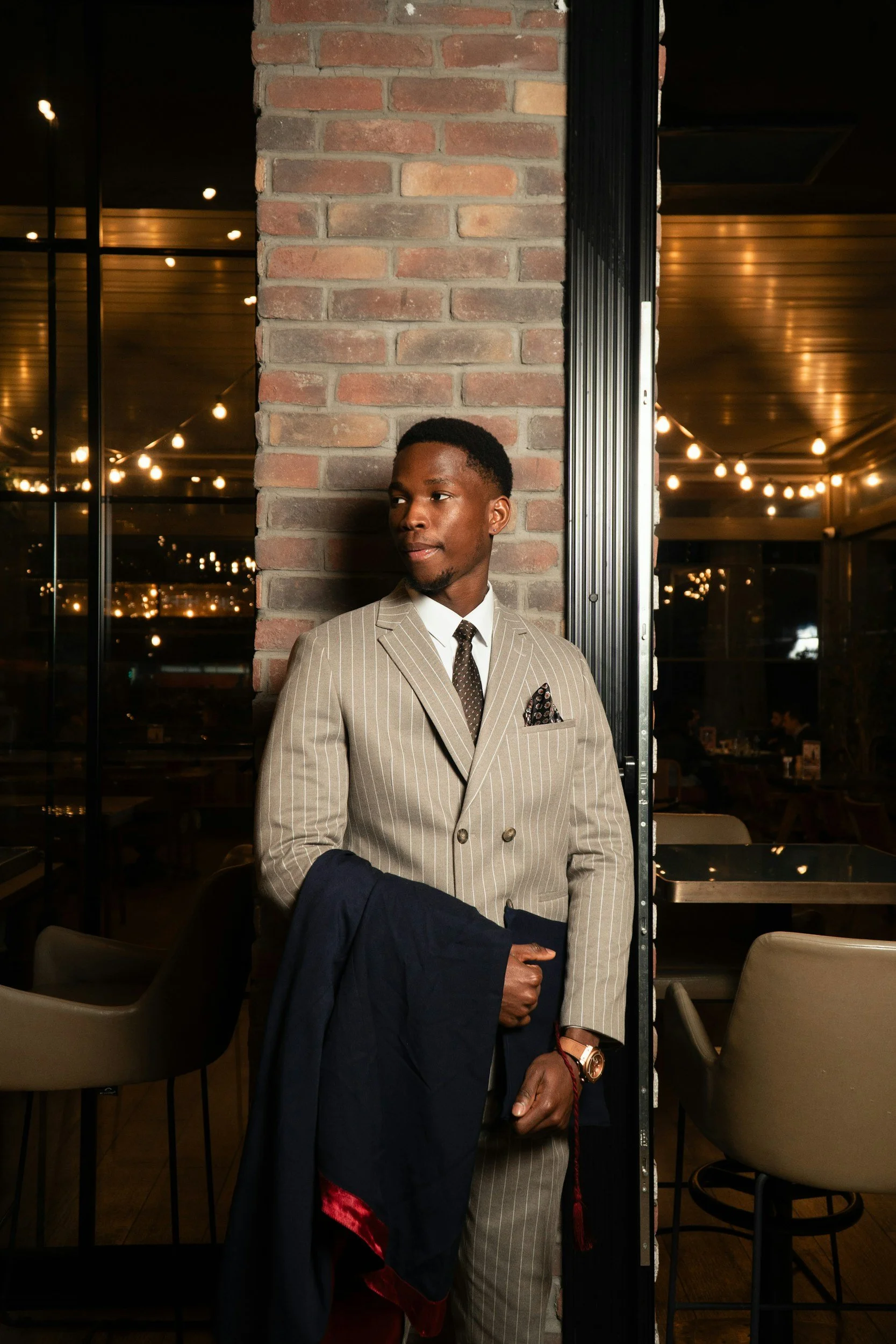
Pocket Squares from Capitol Hill Clothiers
At Capitol Hill Clothiers, our pocket squares are crafted from luxurious fabrics like silk, cotton, and linen, giving a sophisticated finish to your custom suit. Whether you prefer classic white, rich silk patterns, or bold colors, our collection is designed to complement any look. These are available by request only, so reach out here to inquire about our latest stock.
Pocket Squares For Women
Pocket squares aren’t just for men. Women can also embrace this accessory as part of their professional or evening ensemble. Whether paired with a tailored blazer, a chic dress, or a custom suit, a pocket square can enhance your outfit with minimal effort.
The pocket square is an accessory that brings personality, sophistication, and flair to any outfit, whether you're wearing a tailored suit for a formal event or a casual blazer for a day at the office. By following these simple guidelines, you can confidently incorporate a pocket square into your wardrobe and elevate your look.
At Capitol Hill Clothiers, we believe every detail matters. That’s why our custom suits are crafted to perfection and our pocket squares are designed to complement every client’s unique style. Explore our collection today and find the perfect pocket square to match your suit and elevate your look.
FAQ: Pocket square folds
What is the most versatile pocket-square fold?
The presidential fold is the most versatile for formal and business wear, while the one-point fold is the best all-around choice when you want a touch more personality. Begin with those two, then add a puff fold for relaxed social settings.
Can I wear a pocket square without a tie?
Yes. A pocket square works especially well without a tie when you are wearing a sport coat or a softer, more relaxed suit. Use a puff, one-point, or restrained two-point fold rather than a highly formal white flat fold.
Should my pocket square match my tie?
No. Coordinate colors rather than matching exactly. Choose a square that includes a secondary color from the tie, shirt, or jacket, and vary the pattern scale so the pieces complement one another.
How much of the square should show?
For a formal flat fold, keep it to a narrow line, roughly a quarter to half inch. For puffed and pointed folds, around one inch is usually enough. The square should look deliberate, not oversized.
What is the best pocket square for a wedding?
A white linen or cotton square in a presidential fold is timeless for a formal wedding. For a less formal setting, a silk one-point or two-point fold can add color and celebration without overpowering the outfit.
Can women wear pocket squares?
Absolutely. A pocket square is a tailored-jacket accessory, not a gendered one. A soft puff, low one-point fold, or neatly placed silk square can add color and texture to a women’s suit, tuxedo jacket, or blazer.
What pocket square should I wear in a conservative DC office?
Choose white linen or cotton in a presidential fold for the most conservative environments. For a slightly less formal office or networking event, a subtle one-point fold in linen or matte silk is polished and appropriate.