
While some people want to dress well and let people know it, many others (presumably you, since you’re here) prefer to fly under the radar. You don’t need a loud statement suit or jacket, you don’t need polished gold accessories, you don’t even want to have a contrasting color in your outfit. This is your guide to dressing well without attracting attention.
This balance is particularly useful in Washington, DC. An attorney generally wants a jury to concentrate on their argument rather than an expensive-looking suit. A lobbyist may need to move between a congressional office, a client meeting, and a reception without appearing overdressed in one setting or underprepared in another. An executive may want to be as relatable as possible to their staff and not exude the “finer things” vibe.
The answer is not to dress poorly or make yourself smaller. It is to practice restraint: choose good fit, quiet fabrics, balanced proportions, and details that serve a purpose. You can wear an exceptionally well-fitting suit without it raising eyebrows. In fact, much of what makes clothing look polished has little to do with its decoration.
First: What does “flashy” mean to you?
Everyone has a different threshold for “too much”. For some, it may be the number of colors, textures, or patterns. For others, it may exclusively lie in the realm of over-accessorizing. No matter what your bar is, there’s a way for you to determine what works for you and what doesn’t.
When I work with my custom suiting clients, I show a LOT of fabrics. Many times, we end up in the situation of choosing between 2-5 of them, which puts us into the eye exam-like “one or two” comparison test. It’s worth doing this yourself based on what you see around you. “Do I like this person’s outfit or that person’s outfit more? Why?” - Call it judgmental people watching if you want, but it’s effective when determining what you actually think, and therefore how you should act on those thoughts as it pertains to your own wardrobe.
Dress for the Room, Not an Imaginary DC Dress Code
Washington does not have one universal professional uniform. A courtroom, a policy nonprofit, a technology company, and a diplomatic reception can have different expectations.
Start with the actual setting. Who will be there? What is your role? What’s the vibe of the event? Formal or casual? Georgetown Law’s career guidance makes this distinction directly: match the function and avoid standing out through either over- or underdressing. Its recommendations for conservative business settings emphasize darker suits, simple shirts, restrained accessories, and neat presentation.
The practical lesson is to establish the appropriate level of formality first, then make choices within it.

If everyone else is wearing business-casual clothing, a highly formal suit may attract as much attention as a bright pattern. If you are appearing in court or attending a formal client presentation, dressing too casually can become its own distraction.
When expectations are unclear, check the invitation, ask the organizer, or consult someone who regularly works in that environment.
When Understated Dressing Is Especially Useful
There are situations in which reducing visual distraction is a deliberate professional choice.
Attorneys
For court appearances, depositions, sensitive client meetings, and interviews, consider clothing that does not compete with what you are saying.
A dark suit, a simple shirt or blouse, and unobtrusive accessories provide a straightforward starting point. Avoid treating an important appearance as the occasion to debut a dramatic silhouette, a conspicuous watch, or a high-contrast pattern.
This is not an argument that attorneys must dress identically. It is a recommendation to make personal style secondary when the client, evidence, or argument should occupy the room.
Lobbyists and Government Relations Professionals
For meetings with officials, staff, coalition partners, or clients, aim for clothing that feels appropriate across the day’s settings.
A restrained suit can be particularly useful when your schedule crosses several professional environments. Keep the fabric and silhouette conventional, then adjust smaller elements, such as a tie or the layer worn beneath the jacket, to suit the occasion.
When the goal is to build rapport, an outfit that appears deliberately extravagant can introduce a message you did not intend to send.
Executives
Board presentations, negotiations, restructuring discussions, and meetings with concerned employees call for judgment as well as polish.
In those settings, consider leaving conspicuous luxury cues out of the outfit. That might mean a plain leather bag rather than a heavily branded one, restrained jewelry, or a familiar dark suit rather than an obviously special commission.
The point is not to disguise success. It is to avoid making personal spending the most visible detail during a conversation about other people’s priorities.
Start With Quiet Color and Low-Contrast Pattern
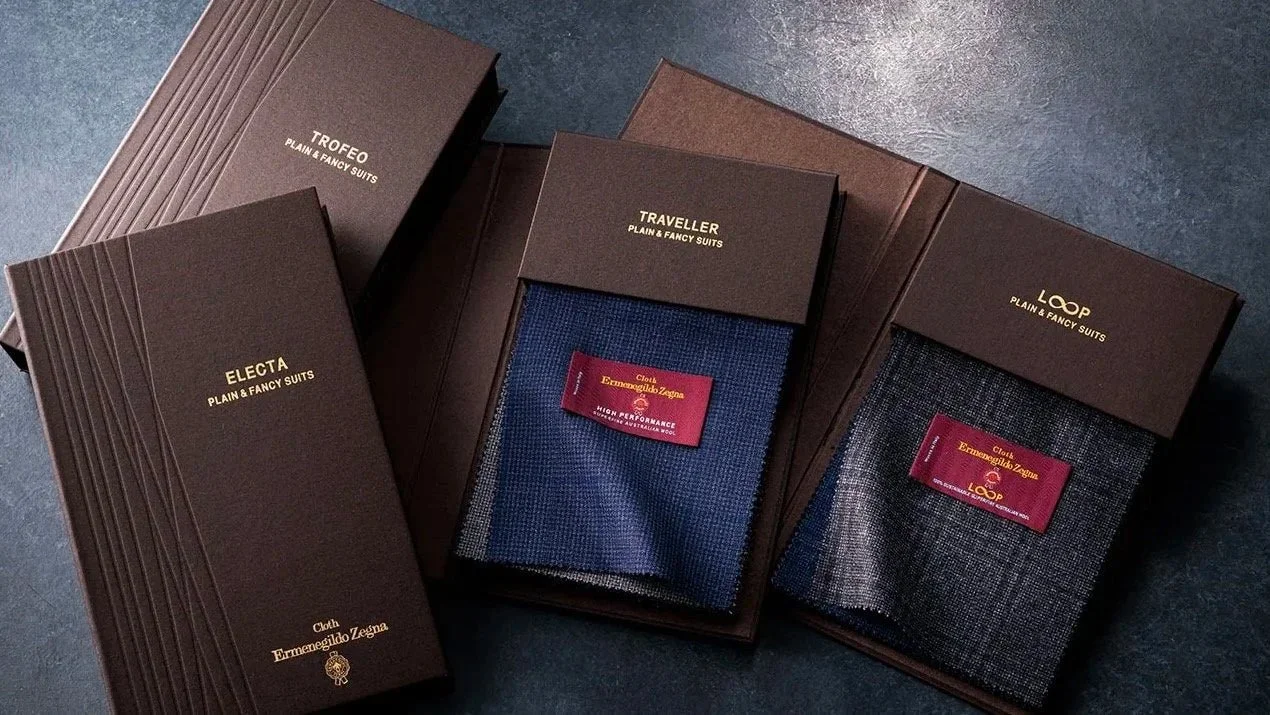
For a conservative wardrobe, begin with navy, charcoal, and medium-to-dark gray.
These colors give you room to vary shirts, blouses, shoes, and knitwear without making every outfit feel different in character. You do not need to eliminate color, but it helps to decide where you want it to appear.
For men, that might be a muted burgundy tie with a navy suit. For women, it might be a soft blue blouse beneath a charcoal jacket. In both cases, one restrained point of color is easier to manage than several competing accents.
If you want pattern, keep the contrast low. Examine fabric from several feet away. If the pattern becomes the first thing you notice, it may be more prominent than you want for an under-the-radar suit.
Prioritize Fit
A well-fitting suit should allow you to stop thinking about it.
It should not require repeated adjustments to the jacket front, waistband, sleeves, or neckline. Nor should it rely on excessive tightness to create a supposedly tailored appearance.
For both men and women, check the following:
The shoulders sit cleanly without obvious overhang or restriction.
The jacket closes without strong pulling across the front.
The collar stays reasonably close to the neck.
Sleeves allow you to bend your arms and work comfortably.
Trousers hang cleanly rather than gripping the thigh or seat.
Pockets remain relatively flat.
The outfit feels comfortable while seated, not just while standing.
For women, pay particular attention to the bust, waist, and hips as separate fitting areas. A jacket can fit one and still pull across another. A skirt should allow a normal stride and comfortable sitting without repeatedly needing to be pulled back into place.
For men, avoid using a very narrow trouser leg, an unusually short jacket, or an aggressively suppressed waist as shortcuts to looking polished. The objective is a clean silhouette with enough room to function.
How Custom Suiting Can Be Understated
Custom clothing does not have to look visibly custom.
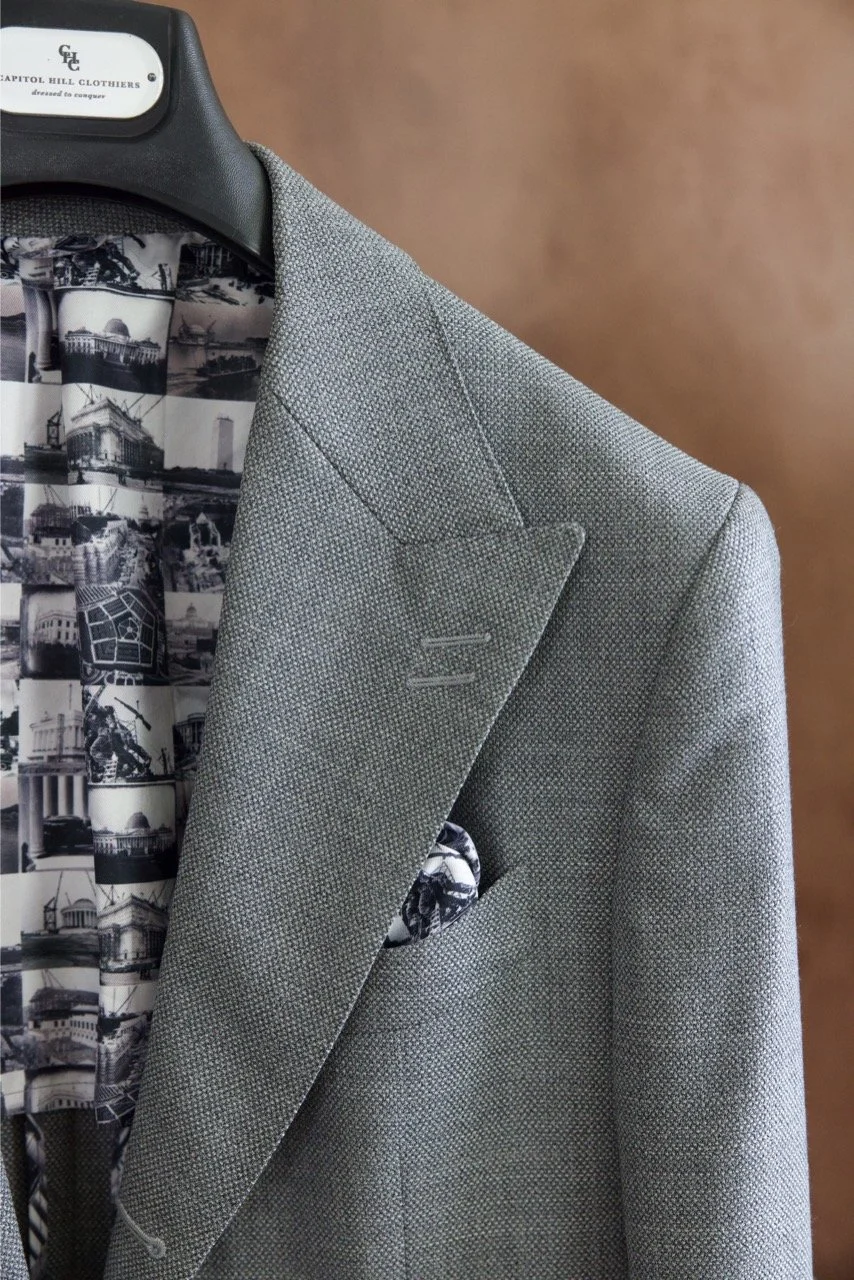
Its practical value can lie in adjusting proportions and fit rather than adding unusual details. A commission can address sleeve length, jacket balance, trouser rise, or differences between the upper and lower body while keeping the finished design entirely conventional.
That is especially relevant for someone who repeatedly encounters the same ready-to-wear problem: a jacket that fits the shoulders but not the waist, trousers that fit the hips but gape at the waistband, or sleeves that never sit correctly.
However, custom is not automatically necessary, and it does not automatically guarantee a perfect result. A good ready-to-wear suit with appropriate alterations may work very well. A custom suit still depends on the measurements, pattern, construction, fittings, and willingness to make adjustments.
The factual case for custom is strongest when it solves a specific problem.
For a restrained commission, the brief can be simple:
Improve the fit.
Keep the silhouette balanced.
Choose a matte or low-luster cloth.
Use conventional lapels and pockets.
Match the buttons and stitching to the garment.
Leave unnecessary decoration out.
At Capitol Hill Clothiers, this is a useful way to frame the discussion: begin with where the suit will be worn and what needs to fit better, rather than how to make it look different.
Conservative Custom Suit Options for Men
You do not need an extensive menu of design details to build a useful professional suit. These combinations provide straightforward starting points.
1. Navy Worsted Wool With a Two-Button Jacket
Choose a solid navy worsted wool with a restrained surface and moderate weight for your actual working conditions.
Pair it with:
A single-breasted, two-button jacket.
Notch lapels proportionate to your frame.
Conventional flap pockets.
Moderate shaping through the waist.
Straight or gently tapered trousers.
A trouser rise that remains comfortable when seated.
This is a sensible direction for someone who wants one suit to cover a broad range of formal professional situations. A white or light blue shirt and a quiet tie keep the overall effect controlled.
2. Charcoal Wool Twill With a Balanced Silhouette
Consider a charcoal wool twill when you want a dark business suit with a little surface interest but no obvious pattern.
Keep the shoulders proportionate, the jacket long enough to look balanced, and the trousers neither excessively narrow nor conspicuously full.
Avoid adding high-contrast buttonholes, decorative edging, or an elaborate vest simply because those options are available.
3. Dark Gray or Navy Open-Weave Wool for Warm Weather
For warmer months, ask to see open-weave or tropical wool options in dark, low-contrast colors.
Evaluate the actual cloth rather than choosing on weight alone. Hold it to the light, feel its texture, and discuss the lining and construction with the tailor. The goal is a suit that suits your commute and indoor working conditions without looking noticeably casual.
Keep the same restrained cut you would use for a conventional business suit.
Conservative Custom Suit Options for Women
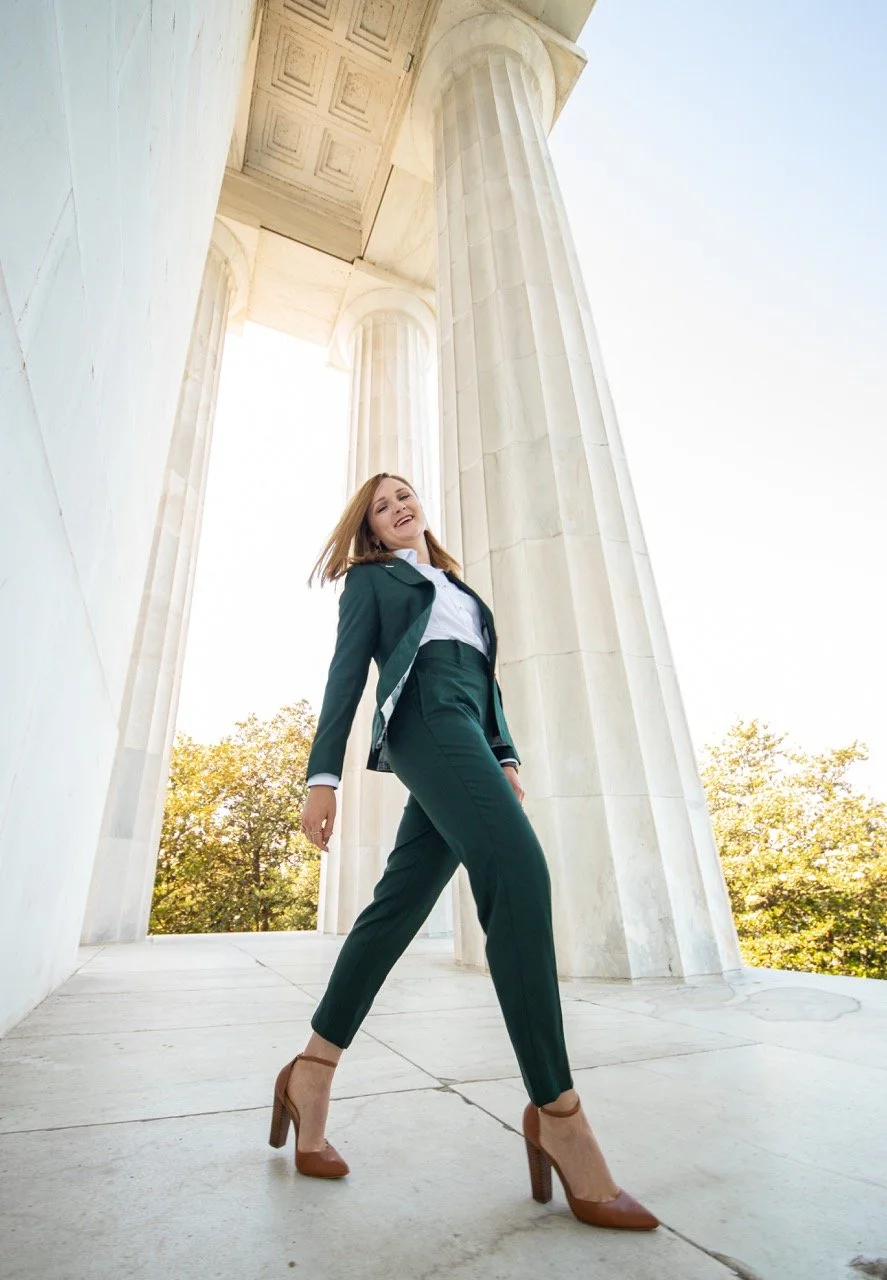
Understated women’s tailoring does not require copying a men’s suit or defaulting to a skirt. A pantsuit, skirt suit, or coordinated dress and jacket can each work when the fit and level of formality suit the setting.
1. Navy Wool Pantsuit With Straight-Leg Trousers
Start with a matte navy worsted wool and a single-breasted jacket.
Consider:
Moderate waist shaping rather than a tightly cinched silhouette.
A jacket length chosen around your proportions.
Simple notch lapels.
Straight-leg or gently tapered trousers.
A comfortable mid- or higher rise, according to preference.
Plain buttons without prominent metallic contrast.
Wear it with a simple blouse, shell, or fine-gauge knit appropriate to the office. The neckline should remain comfortable and secure when you sit, lean forward, or move.
2. Charcoal Wool Skirt Suit With Practical Ease
For someone who prefers skirts, a charcoal suit can provide a restrained alternative to a pantsuit.
Choose a straight or subtly A-line skirt according to how you move and what feels comfortable. Set the hem while wearing the intended shoes, and check the length while seated as well as standing.
The jacket should accommodate the bust and hips without pulling. A modest amount of shape can define the silhouette without making the garment feel close-fitting.
There is no need to add contrast trim, decorative hardware, or unusual lapels to make it look finished.
3. Subtle Herringbone Pantsuit With a Softly Shaped Jacket
A tonal navy or dark gray herringbone can add interest without creating an obvious pattern at a distance.
Pair it with a softly shaped single-breasted jacket and straight or moderately wide trousers. If choosing a wider leg, keep the hem controlled and the overall proportions deliberate rather than exaggerated.
This is a useful option for someone who finds a completely plain suit too austere but still wants a conservative result.
Keep Accessories From Competing
Accessories can shift an otherwise quiet outfit into something much more conspicuous.
For men, consider a restrained tie, dark socks, and polished shoes with a simple shape. A pocket square is optional. If you wear one, it does not need to become a separate focal point.
For women, consider small-scale jewelry, a practical bag with minimal visible branding, and shoes that support the day’s walking and standing. Flats, loafers, and moderate heels can each be appropriate depending on the setting; the important point is not to choose a shoe that makes movement difficult.
For everyone:
Limit highly reflective hardware.
Avoid stacking several statement accessories.
Keep belts and bags visually simple.
Choose eyewear that feels comfortable rather than theatrical.
Be restrained with fragrance.
You do not have to remove every personal detail. One meaningful ring, a favorite watch, or a subtle scarf can provide individuality without making the entire outfit attention-seeking.
Plan for the Whole Washington Workday
Choose clothing for the day you actually have, not only the meeting shown on your calendar.
Try the full outfit with the shoes, bag, coat, and layers you expect to use. Sit at a desk. Reach forward. Walk a flight of stairs. Check whether the jacket still feels comfortable over the intended shirt or blouse.
For days with less formal expectations, reduce formality without abandoning structure:
Men might wear tailored trousers, a collared shirt, and a restrained sport coat.
Women might wear tailored trousers or a skirt with a simple blouse, fine-gauge knit, and optional jacket.
Do not assume a full suit is always the safest answer. Georgetown Law’s networking guidance notes that business casual suits many events while business attire is appropriate for others, and recommends checking with the organizer when uncertain.
Maintenance over Shopping
Before buying something more distinctive, check whether the basics need attention.
Remove lint. Address loose hems and missing buttons. Clean and polish shoes. Replace worn heel tips. Give wrinkled garments appropriate care. Make sure pockets are not overloaded and the bag you carry is in good condition.
These small corrections improve the overall impression without adding another visible element.
Dressing well under the radar is not about making your clothing unremarkable at any cost. It is about removing distractions. When the fit is comfortable, the proportions are balanced, and the choices suit the room, you can look thoroughly put together while keeping the attention where you want it: on the work.